
TL;DR
Schedule 4 to the Local Government (Miscellaneous Provisions) Act 1982 lets a district council in England and Wales require a licence or consent for street trading, which it defines as selling or offering for sale any article in a street. A street includes any road, footway, beach or other area the public can enter without payment. A licence lasts up to 12 months and the council must grant it unless a listed ground for refusal applies. A consent is granted if the council thinks fit, can carry conditions on obstruction and nuisance, lasts up to 12 months and can be revoked at any time. Trading from a stall in a consent street needs the consent to say so. Markets and fairs held by a grant or by enactment are outside the definition. Trading without authority in a licence or consent street is an offence, with a due diligence defence.
A stall that sells hot drinks on a street in December is street trading in the everyday sense, and in England and Wales that can need the council's permission where the district council has adopted the Schedule. The rules sit in Schedule 4 to the Local Government (Miscellaneous Provisions) Act 1982. This article sets out what the Schedule says about streets, licences and consents, who it excludes, and what it leaves to other rules, including the cups a stall serves in.
Where Schedule 4 applies
Section 3 of the Act lets a district council resolve that Schedule 4 applies in its district, and the Schedule then comes into force on the day the resolution specifies. The Schedule and section 3 extend to England and Wales. Both speak only of a district council, and the sources read do not say how that wording applies to Welsh councils, so a stall in Wales should ask its local council. In our reading, that means the Schedule bites in a district only where the council has made the resolution. The legislation.gov.uk page for the Schedule also records several councils where it applies with modifications under local Acts, so the regime for a given street is a question for the council that looks after it. The sources read for this article do not cover Scotland or Northern Ireland.
What counts as street trading
The Schedule defines street trading as the selling or exposing or offering for sale of any article, including a living thing, in a street. A street includes any road, footway, beach or other area to which the public have access without payment, a service area as defined in section 329 of the Highways Act 1980, and any part of a street.
Because the definition turns on public access without payment, in our reading a Christmas market on an open square is on a street in the Schedule's sense. In our reading, a fenced and ticketed market where entry is paid is not obviously within the definition, but the Schedule does not mention ticketed markets, so the council is the place to ask.
Prohibited, licence and consent streets
A district council can designate a street by resolution as a prohibited street, a licence street or a consent street. Before it does, it must publish notice of its intention in a local newspaper, serve a copy on the chief officer of police and on any highway authority responsible for the street, and allow representations for at least 28 days. A designation cannot take effect before one month after the resolution is passed. Trading is prohibited outright in a prohibited street, needs a licence in a licence street and needs the council's consent in a consent street.
Licence or consent
For a licence, the applicant applies in writing, saying the street, the days and times, the articles to be sold and any stall or container to be used. The council has a duty to grant a licence unless one of the grounds in paragraph 3(6) applies, which include that there is not enough space in the street without undue interference, that there are already enough traders in the same goods, and that the applicant is unsuitable. A licence cannot be granted to anyone under 17. It specifies the street, days, times and articles, may carry further conditions such as the size and type of stall and limits on leaving refuse, and unless revoked or surrendered lasts 12 months or any shorter period it states.
For a consent, the council may grant it if it thinks fit and may attach conditions it considers reasonably necessary, including conditions to prevent obstruction of the street or danger to people using it, and nuisance or annoyance. It can vary the conditions at any time. A consent holder cannot trade in a consent street from a van or other vehicle or from a stall, barrow or cart unless the consent includes permission to trade from a stationary vehicle or a portable stall, and the council may limit where and when. A consent lasts up to 12 months and may be revoked at any time.
Under paragraph 9, a council may charge fees it considers reasonable for a licence or consent, and may differ them by duration, street and goods. The holder of a licence or consent may employ other people to help with the trading without a further licence or consent.
Who is outside the Schedule
Paragraph 1(2) lists what is not street trading. The list includes trading by a pedlar under a pedlar's certificate, trading as a news vendor, trading at a petrol filling station, trading at a shop or in a street next to it as part of the shop's business, and selling as a roundsman. It excludes, too, the use for trading, under Part VIIA of the Highways Act 1980, of an object or structure placed on a highway, and the operation of facilities for recreation or refreshment under that Part. It also excludes anything done in a market or fair the right to hold which was acquired by virtue of a grant, including a presumed grant, or acquired or established by virtue of an enactment or order.
In our reading, a stall inside a market that holds such a right is outside the Schedule, and a pop-up market on land without one may not be. The Schedule does not say which markets hold the right, so the market organiser or the council has to confirm it.
Section 7 of the Business and Planning Act 2020 adds that anything done under a pavement licence is not street trading for the purposes of Schedule 4. Our guide to pavement licences for outdoor drinks service covers that licence.
Offences
Under paragraph 10, a person commits an offence by engaging in street trading in a prohibited street, by trading in a licence street or a consent street without authority under the Schedule, or by contravening the principal terms of a licence. It is also an offence to trade in a consent street from a stationary vehicle or a portable stall without the permission the Schedule requires, or to contravene a condition imposed under paragraph 7(9) about where and when that trading may take place. It is a defence to prove that all reasonable precautions were taken and all due diligence exercised. On summary conviction the fine is up to level 3 on the standard scale. Making a false statement in an application is a separate offence.
What the Schedule leaves to other rules
Schedule 4 does not deal with alcohol or food hygiene. Selling alcohol is a licensing question that this article does not cover, and our guide to Temporary Event Notices for weddings and fairs sets out one route. A stall that sells drinks or food may also have food business duties, which this article does not cover. The Schedule also says nothing about drinking vessels. How a stall serves its drinks may be a matter for its other licences, for the conditions in its consent and for the market organiser's rules.
Cups on a market stall
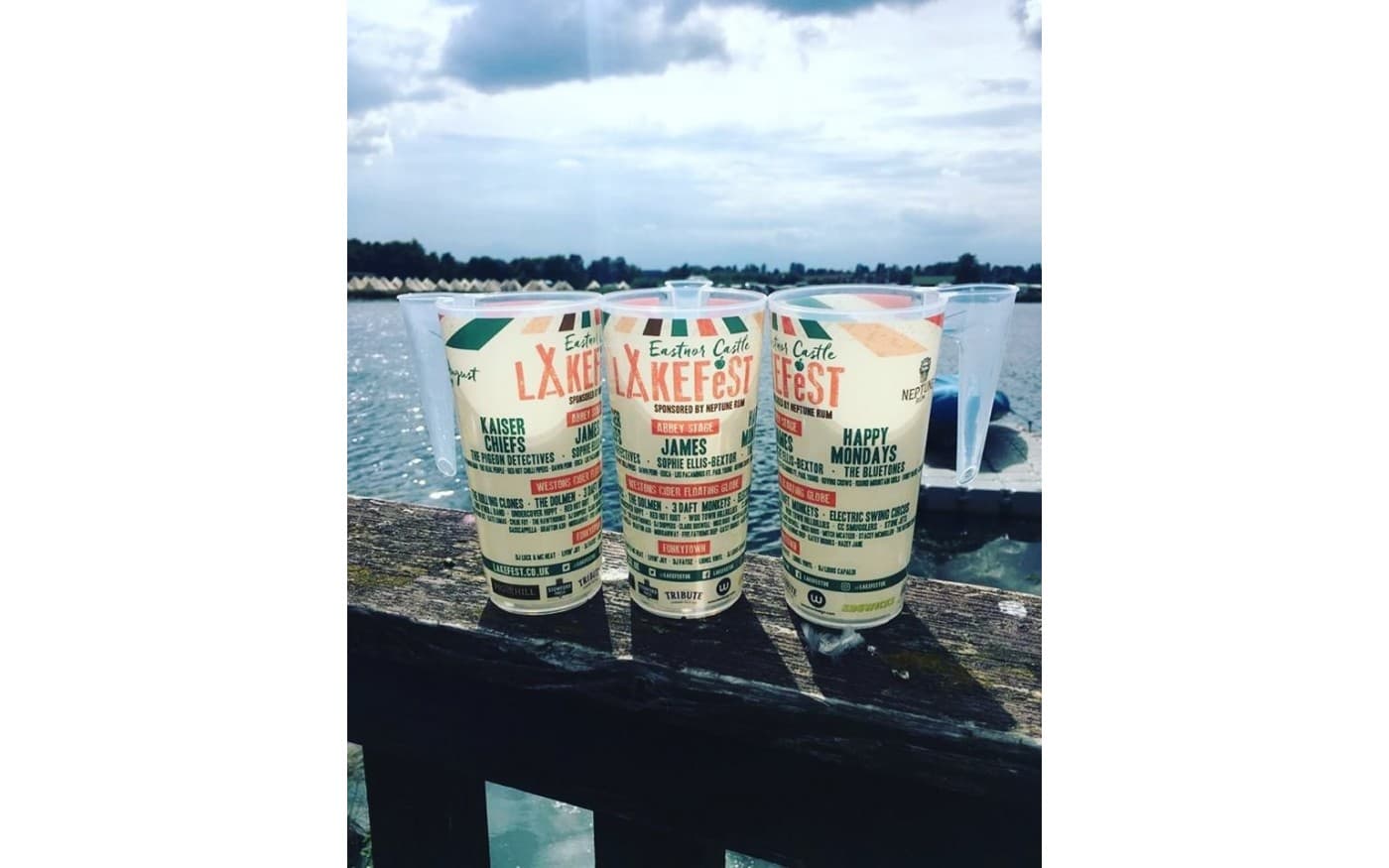
The cup hire page describes hire cups as shatterproof, dishwasher safe and BPA-free, and says they are used at bars, outdoor events and venues where glass is not practical. The reusable event cups page lists printed cups for events. Schedule 4 says nothing about which cup a stall uses, and this article makes no claim about what a council, in its consent conditions, or a market organiser will require. If you are planning a winter market, ask for a quote with the format and the quantity.
Where this stands
This was checked on 6 October 2026. Schedule 4 is shown as up to date with all changes known to be in force on or before 5 October 2026, and the one pending effect on the page concerns paragraph 1(2)(j), which is not relied on here. The Schedule extends to England and Wales.
Frequently Asked Questions
Does a Christmas market stall need a street trading licence?
It depends on the street and the market. Under Schedule 4 to the 1982 Act, a district council that has applied the Schedule can require a licence or consent for selling in a street, defined as a road, footway, beach or other area the public can enter without payment. Markets and fairs held by grant or by enactment are outside the definition, and the council can confirm where a given stall stands.
What is the difference between a street trading licence and a consent?
In a licence street the council must grant a licence unless a ground for refusal in paragraph 3(6) applies, and a licence lasts 12 months or less. In a consent street the council may grant a consent if it thinks fit, attach conditions on obstruction and nuisance, and revoke it at any time. A consent holder needs the consent to say so before trading from a stall or vehicle.
How long does a street trading licence or consent last?
A licence lasts 12 months from the date it is granted unless revoked or surrendered, or any shorter period the licence states. A consent may be granted for any period not exceeding 12 months and can be revoked at any time.
What happens if a stall trades without the right permission?
Paragraph 10 makes it an offence to trade in a prohibited street, or in a licence or consent street without authority. It is a defence to prove all reasonable precautions and due diligence. On summary conviction the fine is up to level 3 on the standard scale.
Does Schedule 4 apply in Scotland or Northern Ireland?
Schedule 4 and section 3 extend to England and Wales. The sources used for this article do not cover Scotland or Northern Ireland.
How we checked this article
Checked on 6 October 2026. Section 3 and Schedule 4 of the Local Government (Miscellaneous Provisions) Act 1982 were read in revised form on legislation.gov.uk. Section 3 shows no known outstanding effects. Schedule 4 is shown as up to date with all changes known to be in force on or before 5 October 2026, with one effect yet to be applied, a substitution of paragraph 1(2)(j) by Schedule 8 to the Charities Act 2006, which the article does not rely on. The page also records that the Schedule has been applied with modifications to named councils by local Acts, and that it was restricted for a time by the Business and Planning Act 2020; the article mentions the first and relies on section 7(3) of that Act only as it is read below. Section 7 of the Business and Planning Act 2020 was read on the same site and shows no known outstanding effects. The Schedule and section 3 extend to England and Wales; the sources read do not cover Scotland or Northern Ireland, and the article says so. The Schedule was searched for the words alcohol, hygiene and food: it does not deal with alcohol or food hygiene, and mentions food only in a saving for section 56 of the Food Act 1984. Fees, fine amounts and local conditions are not repeated beyond what the Schedule states. Product details come from this site's cup hire page and reusable event cups page, read on 6 October 2026: the hire page describes hire cups as shatterproof, dishwasher safe and BPA-free and says they are used where glass is not practical; the article repeats only that. No price, lead time or quantity of a cup is repeated. Whether a particular street or market falls within the Schedule is a question the article leaves to the council and says so.
- Published by
- Branded Cups Ltd
- Sources last checked
- 2026-10-06
Sources
- Local Government (Miscellaneous Provisions) Act 1982, Schedule 4 (street trading)
- Local Government (Miscellaneous Provisions) Act 1982, section 3 (adoption of Schedule 4)
- Business and Planning Act 2020, section 7 (effects of a pavement licence)
- Branded Cups, Reusable cup hire
- Branded Cups, Reusable event cups