
TL;DR
From 1 October 2027 a refundable deposit applies to single-use PET, steel and aluminium drinks containers between 150 ml and 3 litres. A reusable cup filled at the bar is none of those things, and its deposit works differently.
Two things called a deposit are about to sit side by side at UK events, and they have almost nothing in common. One is a national scheme with a launch date. The other is a bar's own arrangement with its customers. Event organisers are already asking which one applies to their cups, so it is worth setting them apart before October 2027.
What the national scheme is
From 1 October 2027, customers will pay a refundable deposit for certain single-use drink containers under the Deposit Return Scheme. That is the opening line of GOV.UK's guidance for producers and retailers, last updated on 30 January 2025.
The scope is defined by material and size. The deposit applies to containers made wholly or mainly from aluminium or steel, or polyethylene terephthalate (PET) plastic, with a capacity of between 150 millilitres and 3 litres. High-density polyethylene, the material of milk bottles, is out. So are containers for liquid medicines and for flavour enhancers or sweeteners added to drinks. The joint policy statement of April 2024 confirms the same three materials and the same 150 ml to 3 litre range across England and Northern Ireland, Wales and Scotland, and says the position on glass will be set out separately by each administration.
The regulations themselves, made in 2025 for England and Northern Ireland, define a deposit item in regulation 4 as a container drink other than a registered low volume product, with the detail set by reference to Schedule 8 to the Environment Act 2021 rather than in fresh words. That is why this article describes scope in the terms the guidance uses.
Where a cup at the bar sits
Read the scope again and notice what it is built around: a single-use container, made of one of three materials, sold to the customer already filled and sealed. A bottle or a can.
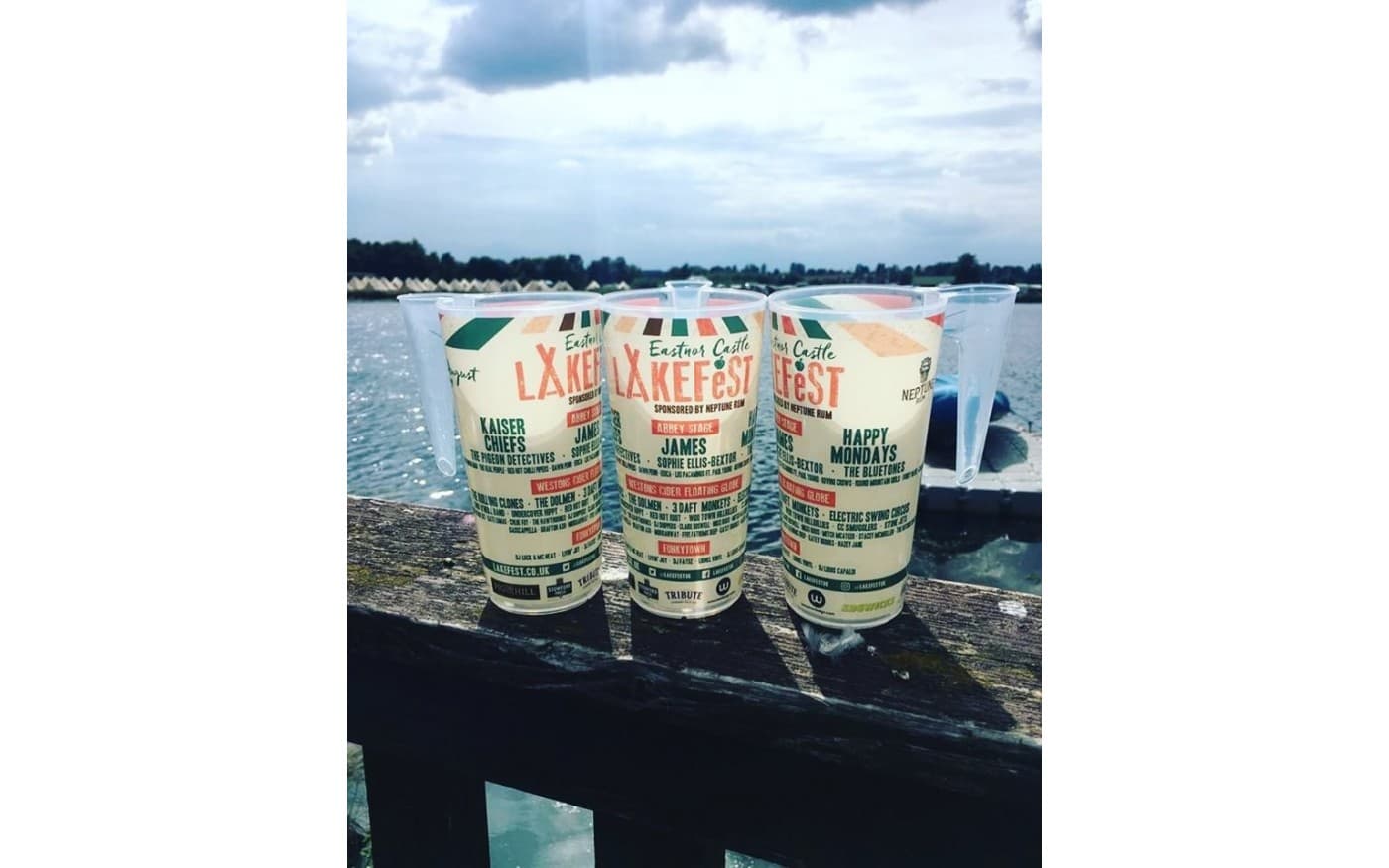
A reusable polypropylene cup handed over at a festival bar is none of those things. It is not single-use. It is not PET, steel or aluminium. And it is not a sealed container the producer filled. The guidance does not mention cups at any point, which is consistent with a scheme designed around bottles and cans. Nothing in the material we checked brings a reusable cup filled at the tap into the 2027 scheme.
The guidance does say something useful about venues, though. Businesses that sell drinks for immediate consumption on the premises, such as cafes, restaurants and pubs, can choose not to charge the deposit at the point of sale on in-scope containers, provided they collect and store the containers for pickup. And the joint policy statement says hospitality venues, food to go stores, schools, gyms, sports or recreation centres, community centres and mobile caterers will not be required to host a return point, though they can apply to host a voluntary one. So a venue's exposure to the national scheme is about the cans and bottles it sells, not about its cups.
The other deposit
The deposit a venue charges on a reusable cup is a different mechanism with a different job. Zero Waste Scotland, in its January 2025 guidance on reusable cup schemes, puts the purpose plainly: the cost of the deposit is designed to cover the cost of the cup, allowing for non-returned cups to be replaced. It lists four ways venues run it: a free borrow-and-return scheme, a small deposit repaid on return, an app that charges the customer if the cup is not returned, and an app-based deposit refunded to the app.
That deposit is set by the venue, held by the venue, and refunded by the venue. It is a replacement fund for stock the venue owns, not a levy on packaging. Our guide to deposit schemes for reusable cups goes through what published schemes report about amounts and return rates.
What to do before 2027
Separate the two questions in your planning. For the cans and bottles your bars sell, follow the producer and retailer guidance as it is updated. For your cups, decide whether you want to own stock or hire reusable cups with washing and collection handled, and set a cup deposit that covers replacement. The re-cup deposit page on this site describes how a venue scheme runs day to day.
Two dates to keep in the diary: 1 October 2027 for the national scheme, and whichever date your first event of that season falls on, because the cup question needs answering first.
Frequently Asked Questions
When does the deposit return scheme start?
On 1 October 2027, according to GOV.UK's guidance for drinks producers and retailers, in England, Northern Ireland and Scotland.
Which containers are in the deposit return scheme?
Single-use drinks containers made wholly or mainly of PET plastic, steel or aluminium, with a capacity between 150 millilitres and 3 litres. HDPE is excluded, and glass is being addressed separately by each administration.
Does the deposit return scheme cover reusable event cups?
The scope described in the guidance is single-use containers of three named materials, and cups are not mentioned. A reusable cup filled at the bar is not single-use, not PET, steel or aluminium, and not sold sealed. The deposit a venue charges on it is a replacement fund run by the venue, which Zero Waste Scotland describes as sized to cover the cost of the cup.
Do pubs and festivals have to charge the deposit on cans and bottles?
GOV.UK says businesses selling drinks for immediate consumption on the premises can choose not to charge the deposit at the point of sale, as long as they collect and store the containers for pickup. Hospitality venues are not required to host a return point but can apply to host a voluntary one.
How we checked this article
Checked on 1 September 2026 against GOV.UK's guidance for drinks producers and retailers, last updated 30 January 2025, for the launch date, the materials and the capacity range, and against the joint policy statement of 25 April 2024 for the scope across the three administrations and the position of hospitality venues. The Deposit Scheme for Drinks Containers (England and Northern Ireland) Regulations 2025 were opened on legislation.gov.uk: regulation 4 defines a deposit item by reference to Schedule 8 to the Environment Act 2021 rather than in its own words, so the article describes scope in the terms the guidance uses and does not quote a definition the regulation does not contain. Zero Waste Scotland's page on reusable cup schemes, published 10 January 2025, for the purpose of a venue deposit.
- Published by
- Branded Cups Ltd
- Sources last checked
- 2026-09-01
Sources
- GOV.UK, Deposit Return Scheme: drinks producer and retailer responsibilities (updated 30 January 2025)
- GOV.UK, Deposit Return Scheme for drinks containers: joint policy statement (25 April 2024)
- The Deposit Scheme for Drinks Containers (England and Northern Ireland) Regulations 2025, regulation 4
- Zero Waste Scotland, Reusable cup schemes (10 January 2025)