TL;DR
A UK pint is 568.26 millilitres by statute, and draught beer may only be sold in a third, half, two-thirds or multiples of half a pint. What that means when you choose a cup size.
Ask a supplier for pint cups and you will be asked a second question: to the line, or to the brim. The answer depends on a unit that is defined in an Act of Parliament and on a short list of quantities that has changed once in the last forty years.
What a pint is, in millilitres
The pint is defined in Schedule 1 to the Weights and Measures Act 1985. Part IV of that Schedule gives it as 0.56826125 cubic decimetres, a definition substituted on 1 October 1995. A cubic decimetre is a litre, so a UK pint is 568.26 millilitres. The same Schedule keeps the gallon at 4.54609 cubic decimetres, but only as a supplementary indication since the 1995 change.
This is the figure the half pint follows: 284.13 millilitres. On this site the paper festival cups are listed at 568 ml (20 oz) for the pint and 284 ml (10 oz) for the half pint, which is the same arithmetic rounded to the millilitre.
The quantities draught beer may be sold in
Article 2 of the Weights and Measures (Intoxicating Liquor) Order 1988 sets out how beer and cider can be sold by retail when they are not pre-packed in closed containers. As originally made, the permitted quantities were a third of a pint, half a pint, or a multiple of half a pint.
The 2011 Order added two-thirds of a pint to that list, with effect from 1 October 2011. GOV.UK now summarises the position for draught beer and cider sold by the glass as "third, half, two-thirds of a pint and multiples of half a pint", and notes that there are no specified quantities for packaged beer or cider.
So a bar cannot legally pour a draught pint into a 500 ml cup and call it a pint. The quantity is fixed; the vessel has to match it.
Why the vessel matters on the premises
Article 2(1)(b) of the 1988 Order adds a second condition: where beer or cider is sold for consumption on the premises of the seller, it must be sold only in a capacity measure of the quantity in question. Article 2(2) allows an exception when the drink is dispensed through stamped measuring equipment installed so the customer can watch the delivery into their container.
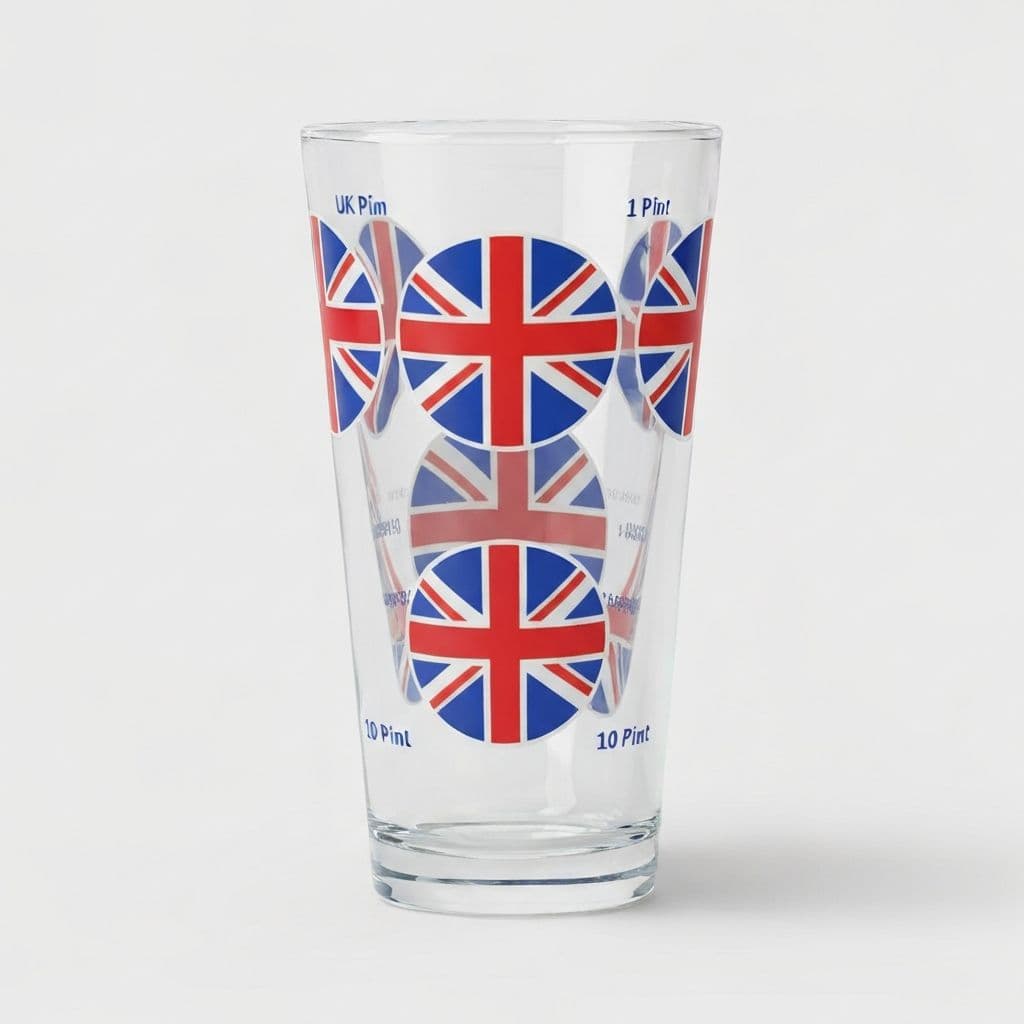
For an event bar pouring from a tap, that means the cup itself is the measure. This is where the pint to line and pint to brim distinction comes from: a pint-to-line cup holds the full pint up to a printed line with headroom above it, while a pint-to-brim cup holds the pint when filled to the top edge.
Choosing between the sizes
Pint to line is the format this site's range leads with for beer and cider, because the headroom keeps the pour tidy on a busy bar. Pint to brim gives the same legal quantity in a slightly smaller cup. The half pint suits tastings, sampling and children's drinks. The two-thirds measure is legal for draught beer and is the least common of the four at events.
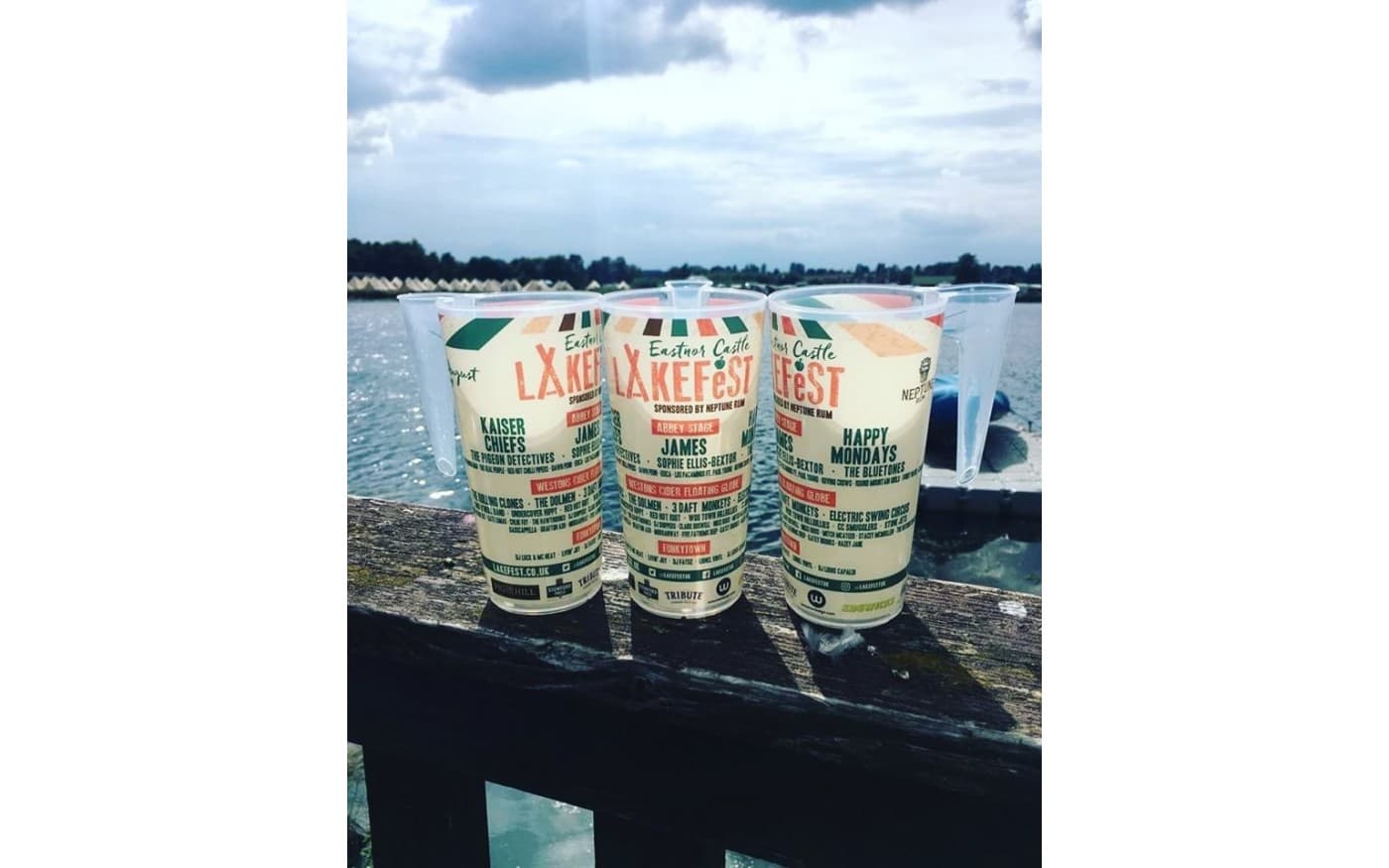
The reusable event cups range covers pint to line, pint to brim and half pint, blank or printed in one colour or full colour depending on the size, from 50 cups. If you are choosing between them, a sample cup settles the question faster than a spreadsheet.
Frequently Asked Questions
How many millilitres are in a UK pint?
Schedule 1 to the Weights and Measures Act 1985 defines the pint as 0.56826125 cubic decimetres, which is 568.26 millilitres. A half pint is 284.13 millilitres.
Can draught beer be sold in a two-thirds pint measure?
Yes. The 2011 amending Order added two-thirds of a pint to the permitted quantities for draught beer and cider from 1 October 2011. The full list is a third, half, two-thirds of a pint and multiples of half a pint.
Does a pint cup have to be a measure?
Where draught beer or cider is sold for consumption on the premises, article 2(1)(b) of the 1988 Order requires it to be sold in a capacity measure of the quantity in question, unless it is dispensed through stamped measuring equipment in view of the customer. In practice the cup is the measure.
What is the difference between pint to line and pint to brim?
Both hold a legal pint. A pint-to-line cup holds it up to a printed line with headroom above, and a pint-to-brim cup holds it when filled to the top edge. The markings guide on this site covers which one an event needs.
How we checked this article
Checked on 1 September 2026 against the legislation rather than trade summaries: Schedule 1 to the Weights and Measures Act 1985 for the metric value of the pint, article 2 of the Weights and Measures (Intoxicating Liquor) Order 1988 for the quantities in which draught beer and cider may be sold, the 2011 amending Order for the addition of two-thirds of a pint and its commencement date, and the GOV.UK specified quantities page for the current list. Cup capacities in millilitres and ounces are taken from this site's own product pages.
- Published by
- Branded Cups Ltd
- Sources last checked
- 2026-09-01