TL;DR
Group 12 of Schedule 9 to the Value Added Tax Act 1994 exempts supplies of goods and services by a charity in connection with an event organised for charitable purposes whose primary purpose is raising money and which is promoted as being primarily for the raising of money. If more than 15 events of the same kind are held at the same location in a financial year, the exemption does not apply to any of them, but weeks in which gross takings from that kind of event stay at or below 1,000 pounds are disregarded. HMRC's helpsheet says the exemption is mandatory where the conditions are met, that normal VAT treatment applies to what the charity buys, and that surplus commemorative items such as adult t-shirts and mugs sold after the event are standard rated. The Group extends to the United Kingdom.
A parish Christmas fair, a quiz night for a hospice or a carol evening on a village green can all be run to raise money. Whether the charity's takings from such an event carry VAT depends on Group 12 of Schedule 9 to the Value Added Tax Act 1994, which exempts certain fundraising events. HMRC explains the rule in a helpsheet on GOV.UK. This article sets out the conditions, the limit on how many events qualify, and how cups bought for an event, sold at it or sold afterwards fit in. It covers the VAT exemption only. Our guide to sponsor logos on event cups covers VAT on sponsorship separately.
What the law says
Group 12 has three items. Item 1 covers the supply of goods and services by a charity in connection with an event that is organised for charitable purposes by a charity or jointly by more than one charity, whose primary purpose is the raising of money, and that is promoted as being primarily for the raising of money. Items 2 and 3 apply similar tests to a qualifying body, and to an event organised jointly by a charity and a qualifying body. Note 2 to the Group says a charity includes a body corporate wholly owned by a charity if its profits are transferred or otherwise payable to a charity. The Group is marked as extending to the United Kingdom.
What HMRC's helpsheet adds
The helpsheet was last updated on 20 April 2026. It describes a fundraising event for tax purposes as an event clearly organised primarily to raise money for the benefit of the charity or qualifying body. Events that incidentally make a profit are outside the exemption, and people attending must be aware of the fundraising function. It says an event is an incident with an outcome or a result, so activities of a semi-regular or continuous nature, such as the frequent operation of a shop or bar, cannot be an event.
The helpsheet also reports an Upper Tribunal decision of January 2025. Following it, HMRC accepts that an event can have more than one primary purpose, and that the word primarily in the promotion condition can be ignored. The event must still be promoted so that people attending know it is a fundraiser, and the helpsheet says to keep examples of publicity material, tickets and similar promotional items as evidence. The helpsheet says the exemption is mandatory for an event that meets all the conditions, so there is no option to charge VAT instead.
The limit on similar events
Notes 4 and 5 to Group 12 set the limit. If more than 15 events of the same kind involving the charity are held at the same location in a financial year, items 1 to 3 do not apply to any event of that kind held there in that year. A week in which the gross takings from that kind of event at that location stay at or below 1,000 pounds is disregarded when counting. The helpsheet gives the same rule in plain terms. It adds that the 1,000 pound figure is measured before costs, so the hire of a room cannot be offset against it. It says a concert repeated on successive evenings counts as separate events, while a single event at one location over more than one day counts as one.
Who can hold an exempt event
The helpsheet says only events organised exclusively by charities, their trading subsidiaries and qualifying bodies may be exempt fundraising events. A joint event with someone else is outside the exemption. It also says an individual or independent group raising money as part of a national campaign is unlikely to have charitable status or be a qualifying body, so the exemption would not apply to such events.
What is covered, and what is not
For an exempt event the helpsheet lists admission charges, brochures that may be zero rated, other items sold by the charity such as t-shirts, and sponsorship payments directly connected with the event. It says that selling goods is not itself an event, but that where the sale takes place in the context of a qualifying fundraising event it is covered by the relief. It says normal VAT treatment applies to the goods and services the charity buys. It also says that surplus commemorative items such as adult t-shirts and mugs sold for a period after the event are standard rated.
On VAT recovery, the helpsheet says in its section on professional fundraisers that VAT incurred in connection with an exempt event will generally not be recoverable, while VAT incurred in making taxable supplies within the event may be, and that this applies if the charity or qualifying body makes all the arrangements for the event. In an earlier section it says that exempt supplies can restrict the VAT a registered charity recovers on overheads.
Where cups fit in
None of the sources read mentions cups. What follows is our reading.
Cups the charity buys or hires for the event are purchases, so the helpsheet's statement that normal VAT treatment applies to them is the relevant one. Whether that VAT can be recovered depends on the points above and on the charity's own position, which is a question for its adviser or for HMRC.
A printed cup sold during the event looks to us like one of the other items sold in connection with it, in the same position as the t-shirts the helpsheet names. A printed cup left over and sold in the weeks after looks closer to the mugs the helpsheet says are standard rated. The helpsheet does not name cups, so a charity relying on either reading should confirm it.
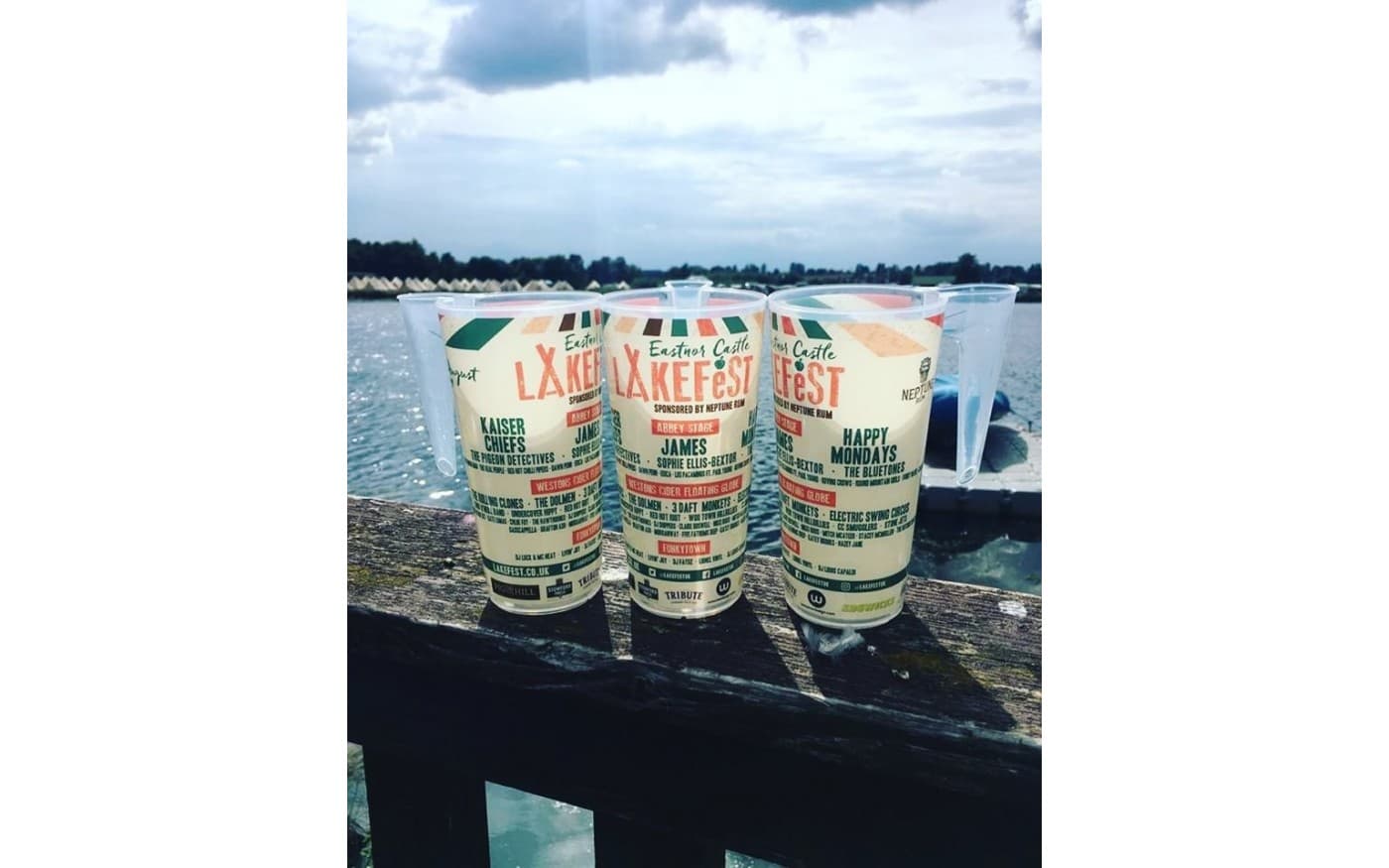
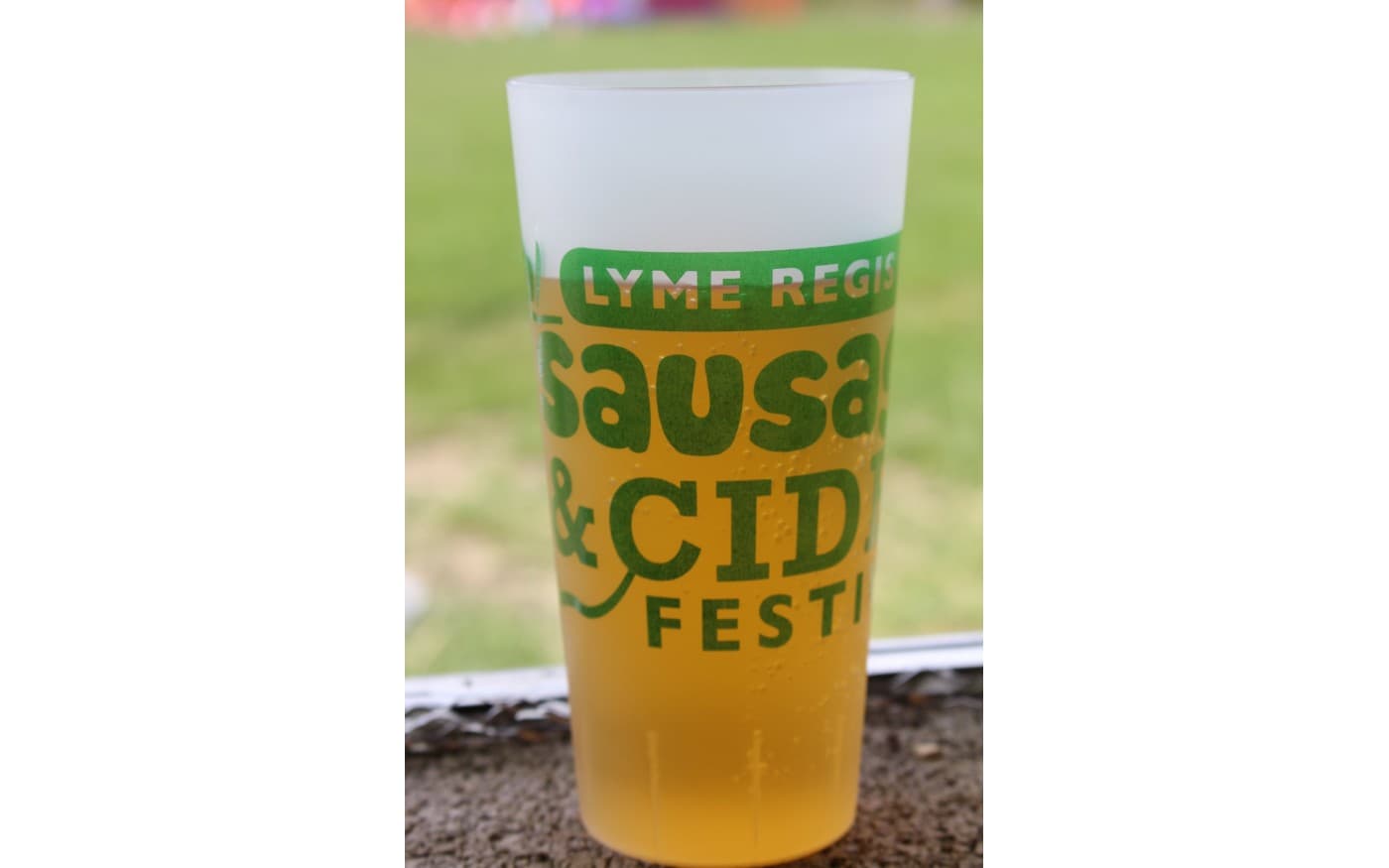
The promotion condition is a place where a cup can help. The helpsheet says publicity material, tickets and similar promotional items should clearly refer to fundraising. A cup given out at the event with the fundraising purpose printed on it is, in our reading, one more item that shows the event was promoted as a fundraiser, and a sample kept with the records would support that.
On the product side, the promotional cups page describes reusable cups printed in one colour or as a full colour wrap. The reusable event cups page lists printed pint and half pint cups described as BPA-free and dishwasher safe. For an event where the charity would rather not hold stock, the cup hire page says collection and washing support is available after the event. A quote can be asked for with the date and the numbers expected.
What this article does not cover
It does not cover Gift Aid, whether a charity's governing document lets it run a given event itself or only through a trading company, or licences for alcohol or street trading at the event. Our guide to the temporary event notice covers one of those licences. The helpsheet says that an event held by a charity that meets the criteria for the VAT exemption automatically qualifies for HMRC's extra-statutory concession ESC C4 on income tax and corporation tax, as long as the profits are applied charitably, and this article does not go further than that.
Where this stands
This was checked on 26 October 2026. Schedule 9 is shown as up to date with changes known to be in force on or before 25 October 2026, and the helpsheet was last updated on 20 April 2026. Neither source read mentions cups.
Frequently Asked Questions
Is a charity Christmas fair exempt from VAT?
It can be. Group 12 of Schedule 9 to the Value Added Tax Act 1994 exempts supplies in connection with an event organised by a charity whose primary purpose is raising money and which is promoted as being primarily for the raising of money. HMRC's helpsheet says the exemption is mandatory where all the conditions are met.
How many similar fundraising events can be exempt at one location in a year?
Notes 4 and 5 to Group 12 say that if more than 15 events of the same kind are held at the same location in a financial year, the exemption does not apply to any of them. Weeks in which gross takings from that kind of event stay at or below 1,000 pounds are disregarded.
Is VAT charged on the cups a charity buys for an event?
HMRC's helpsheet says normal VAT treatment applies to the goods and services a charity buys for a qualifying event. It does not mention cups.
What about cups sold after the event?
The helpsheet says surplus commemorative items such as adult t-shirts and mugs sold for a period after the event are standard rated. It does not name cups, so in our reading a charity should confirm the treatment before relying on it.
Does the exemption apply across the UK?
Group 12 is marked as extending to the United Kingdom on legislation.gov.uk.
How we checked this article
Checked on 26 October 2026 (sources first read on 11 October 2026 and re-opened). Group 12 of Schedule 9 to the Value Added Tax Act 1994 (fund-raising events by charities and other qualifying bodies) was read in revised form on legislation.gov.uk. The Group is marked as extending to the United Kingdom, and the Schedule is shown as up to date with all changes known to be in force on or before 25 October 2026; the one change listed as yet to be applied to the Schedule concerns Group 6 and not Group 12. HMRC's helpsheet Fundraising events: exemption for charities and other qualifying bodies was read through the GOV.UK content API; it shows 20 April 2026 as its last public update (its GOV.UK content record carries a later technical stamp of 30 September 2026 with no change note, and the sections checked below read as before), and its sections 1.4, 3.2, 3.3, 3.5 to 3.13, 3.16, 4.1, 4.2, 4.5, 4.6, 4.7 and 4.8 are the ones reported. Where the helpsheet and the statute differ in wording on the word primary, the article reports both, as the helpsheet says it follows an Upper Tribunal decision of January 2025. The article covers the VAT exemption only. It does not cover Gift Aid, what a charity's governing document allows it to do, or direct tax beyond the one sentence the helpsheet gives. Applications to cups are marked as our reading, because none of the sources read names a cup. Product details come from this site's promotional cups, reusable event cups and cup hire pages, read on 26 October 2026; the article repeats only that cups can be printed in one colour or as a full colour wrap, that they are reusable, BPA-free and dishwasher safe, and that hire includes collection and washing support. No price, lead time or quantity of a cup is repeated.
- Published by
- Branded Cups Ltd
- Sources last checked
- 2026-10-26
Sources
- Value Added Tax Act 1994, Schedule 9, Group 12 (fund-raising events by charities and other qualifying bodies)
- HMRC, Fundraising events: exemption for charities and other qualifying bodies (GOV.UK, updated April 2026)
- Branded Cups, Promotional cups
- Branded Cups, Reusable event cups
- Branded Cups, Reusable cup hire