TL;DR
Regulation 12(1) of the Waste (England and Wales) Regulations 2011 requires an establishment or undertaking that imports, produces, collects, transports, recovers or disposes of waste, or controls it as a dealer or broker, to take all such measures available to it as are reasonable in the circumstances to apply a priority order on the transfer of waste: prevention, preparing for re-use, recycling, other recovery, disposal. Regulation 12(2) allows a departure from that order where life-cycle thinking justifies it. Defra's guidance says to use durable rather than disposable cutlery and containers, and to ask suppliers to use re-useable packaging.
Most of the questions about event cups are asked at the end of the chain: which bin, which carrier, which stream. A rule that sits earlier in the chain ranks the options, starting with preventing the waste. This article sets out regulation 12 of the Waste (England and Wales) Regulations 2011, what Defra's guidance adds, and where a cup that is washed and filled again fits in the order. It covers England and Wales and is general information, not legal advice.
What regulation 12 requires
Regulation 12(1) applies to an establishment or undertaking which imports, produces, collects, transports, recovers or disposes of waste, or which as a dealer or broker has control of waste. On the transfer of waste, it must take all such measures available to it as are reasonable in the circumstances to apply the following waste hierarchy as a priority order: prevention, preparing for re-use, recycling, other recovery (for example energy recovery), and disposal. Whether a particular organiser or venue falls within those opening words depends on what it does with the waste at its event; in our reading, an organiser that produces or controls cup waste on site is likely to.
Regulation 12(2) allows a departure from the priority order so as to achieve the best overall environmental outcome, where this is justified by life-cycle thinking on the overall impacts of the generation and management of the waste. Regulation 12(3) lists what must be taken into account when considering those impacts: the principles of precaution and sustainability, technical feasibility and economic viability, protection of resources, and the overall environmental, human health, economic and social impacts. The page on legislation.gov.uk showed no known outstanding effects for regulation 12 on 28 October 2026.
What Defra's guidance says
The guidance states that it is produced under regulation 15(1) of the same Regulations and that any person subject to the regulation 12 duty must have regard to it. It describes itself as for any business or public body which generates, handles or treats waste. GOV.UK shows it as published on 15 June 2011, and it refers to the EU Waste Framework Directive, so we use it for the explanation rather than for the legal test.
On the duty itself, section 3.1 says a business that produces or handles waste needs to take all such measures as are reasonable in the circumstances to apply the waste hierarchy to prevent waste, and to apply the hierarchy as a priority order when it transfers waste to another person. It adds that the business will need to add a declaration to its Duty of Care waste transfer notes confirming that it has complied with the duty, and offers wording for it. Our guide to the duty of care that follows a cup off your site covers the paperwork on the same transfer.
Section 1 describes the ranking. Prevention is the top priority, and when waste is created the order is preparing it for re-use, then recycling, then recovery, and last of all disposal such as landfill. The guidance lists under prevention using less material in design and manufacture, keeping products for longer, and re-use. Preparing for re-use covers checking, cleaning, repairing and refurbishing whole items or spare parts. The guidance table of the hierarchy by material shows prevention and preparation for re-use as the first two stages in its plastics column.
Reusable cups and the guidance
Section 4.2 of the guidance gives examples of how a business can prevent waste. One of them reads: re-use carrier bags, refill water containers from the tap rather than buy bottled water, and use durable rather than disposable cutlery and containers, and it adds that businesses should ask suppliers to use re-useable packaging and do so with their own customers. Cups are not named in that sentence.
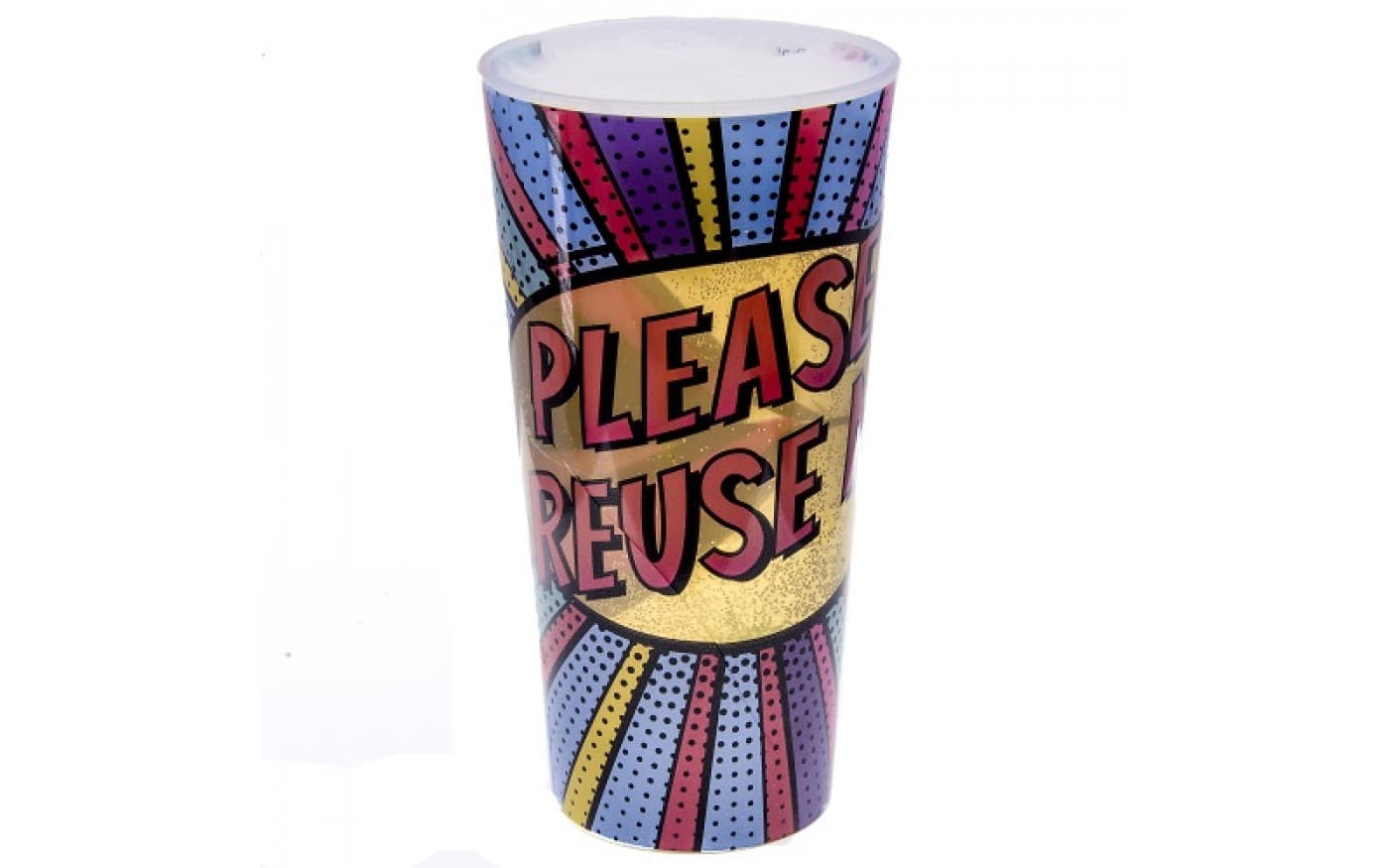
The guidance defines re-use as using again a substance, product or material before it becomes waste. In our reading, an event cup that is washed, checked and filled again stays a product through each cycle, and the washing is the kind of cleaning that the guidance describes under preparing for re-use. In our reading, a single-use cup that is binned after one drink enters the waste stream at that point, and the hierarchy then ranks what happens to it: recycling above recovery above disposal. The regulation does not say which cup an event must use. It sets a duty to take reasonable measures, and what is reasonable for a village fair and for a stadium is not the same, in our reading.
Regulation 12(2) matters here too. A departure from the order is allowed where life-cycle thinking justifies it, so, in our reading, an organiser weighing a reusable system against a single-use one can look at technical feasibility, economic viability and overall impacts, which are the matters listed in regulation 12(3). Our guide to whether to hire or buy reusable cups sets out how venues compare those options.
Scotland and Northern Ireland
These are the England and Wales Regulations. Paragraph 1(4) of Schedule 1 to the Packaging (Essential Requirements) Regulations 2015 names a different provision for each nation when it refers to the waste hierarchy: regulation 12(1) and (2) of the 2011 Regulations for England and Wales, paragraphs 4(2) and (3) of schedule 11 to the Environmental Authorisations (Scotland) Regulations 2018 for Scotland, and regulation 17(1) and (2) of the Waste (Northern Ireland) Regulations 2011 for Northern Ireland. We did not read the Scottish or Northern Irish provisions. An organiser running an event there should check them.
On the product side
The cup hire page says cups are collected and serviced so that the organiser does not have to wash them on site, and that hire starts at 1,000 cups. It states that every cup in the hired inventory undergoes a minimum of 200 reuse cycles before being responsibly recycled. That is the company's own statement and we have not tested it. For stock that an organiser keeps across a season, the reusable event cups range starts at 50 cups per design, and a quote covers a larger run.
Where this stands
This was checked on 28 October 2026. The regulation is in force as shown on legislation.gov.uk, and the Defra guidance is the published 2011 document. Whether a given measure is reasonable in the circumstances is a judgement that the regulation leaves to the person subject to the duty, and an organiser with a large site should take advice.
Frequently Asked Questions
What does regulation 12 of the Waste (England and Wales) Regulations 2011 require?
It requires an establishment or undertaking that imports, produces, collects, transports, recovers or disposes of waste, or controls it as a dealer or broker, to take all such measures available to it as are reasonable in the circumstances to apply the waste hierarchy as a priority order on the transfer of waste.
What is the order of the waste hierarchy?
Prevention, preparing for re-use, recycling, other recovery such as energy recovery, and disposal, as listed in regulation 12(1).
Can an organiser depart from that order?
Regulation 12(2) allows a departure from the priority order to achieve the best overall environmental outcome, where this is justified by life-cycle thinking on the overall impacts of the generation and management of the waste.
Does the guidance name reusable cups?
Section 4.2 of Defra's guidance says to use durable rather than disposable cutlery and containers, and to ask suppliers to use re-useable packaging. It does not name cups. Whether a washed event cup counts as re-use is our reading of the guidance's definition.
Does the same regulation apply in Scotland and Northern Ireland?
No. Paragraph 1(4) of Schedule 1 to the Packaging (Essential Requirements) Regulations 2015 names a separate provision for each of Scotland and Northern Ireland. Regulation 12 of the 2011 Regulations is the England and Wales provision.
How we checked this article
Checked on 28 October 2026. Regulation 12 of the Waste (England and Wales) Regulations 2011 was read in revised form on legislation.gov.uk and showed no known outstanding effects. The Defra Guidance on applying the waste hierarchy was read as the PDF published on GOV.UK (page dated 15 June 2011), for sections 1, 3 and 4 and the table of the hierarchy by material. That guidance describes the law as it stood in 2011 and refers to the EU Waste Framework Directive, so the article uses it for the explanation and takes the duty itself from the regulation. Paragraph 1 of Schedule 1 to the Packaging (Essential Requirements) Regulations 2015 was read for its cross-references to the equivalent provisions for Scotland and Northern Ireland; whether a given cup counts as packaging was not examined. The Branded Cups cup hire page was read for the company facts. Statements marked as our reading are inferences and appear in none of the sources. This article is general information, not legal advice.
- Published by
- Branded Cups Ltd
- Sources last checked
- 2026-10-28
Sources
- The Waste (England and Wales) Regulations 2011, regulation 12 (duty in relation to the waste hierarchy)
- GOV.UK, Guidance on applying the waste hierarchy (Defra, published 15 June 2011)
- Defra, Guidance on applying the waste hierarchy (PDF)
- The Packaging (Essential Requirements) Regulations 2015, Schedule 1
- Branded Cups, Event cup rental