TL;DR
Section 323A of the Income Tax (Earnings and Pensions) Act 2003 says no income tax arises on a benefit an employer provides to an employee, or to a member of their family or household, if four conditions are met: the benefit is not cash or a cash voucher, its cost does not exceed 50 pounds, it is not provided under salary sacrifice or any other contractual obligation, and it is not provided in recognition of particular services performed or to be performed in the employment. Where the employer is a close company and the employee is a director or other office-holder, or a member of their family or household, a fifth condition applies under section 323A(10), read with section 323B: the benefit cost must not exceed the employee's available exempt amount, which starts at 300 pounds for the tax year and is reduced by eligible benefits already provided in it. HMRC's page says no tax, National Insurance or notification is needed for a trivial benefit. The provisions extend to the United Kingdom. In our reading, a branded cup of modest cost given to all staff at Christmas can meet the conditions.
A branded reusable cup in each member of staff's Christmas box is a small gift, and the tax question is whether the employee is taxed on it. The rule that usually answers it is the trivial benefits exemption in sections 323A and 323B of the Income Tax (Earnings and Pensions) Act 2003, which HMRC describes in a short GOV.UK page. This article sets out the conditions, what they leave out, and how they apply to a cup in our reading. It covers income tax on the employee only. Our guide to promotional cups as business gifts covers gifts to customers, which sit under different rules.
The four conditions
Section 323A(1) says no liability to income tax arises in respect of a benefit provided by, or on behalf of, an employer to an employee, or to a member of the employee's family or household, if conditions A to D are met. They are:
- Condition A: the benefit is not cash or a cash voucher. - Condition B: the benefit cost does not exceed 50 pounds. - Condition C: the benefit is not provided under relevant salary sacrifice arrangements or any other contractual obligation. - Condition D: the benefit is not provided in recognition of particular services performed by the employee in the course of the employment, or in anticipation of such services.
HMRC's page puts the same test in plainer words. It says there is no need to pay tax or National Insurance or tell HMRC if the benefit cost 50 pounds or less to provide, is not cash or a cash voucher, is not a reward for work or performance, and is not in the terms of the contract. It adds that a benefit provided through a salary sacrifice arrangement is not exempt. The page shows 1 April 2015 as its last update, so the statute is the authority where the wording differs.
What counts as the cost
Section 323A(5) defines benefit cost as the cost of providing the benefit. Where a benefit goes to more than one person and it is impracticable to work out the cost for each, because of its nature or the scale of provision, it is the average cost per person: the total cost divided by the number of people who receive it (section 323A(6)). The Act does not list which costs go into the figure, so for a printed cup it does not say in terms whether printing, delivery or VAT count. HMRC's page speaks of what it cost the employer to provide. In our reading, the safest way to apply a limit is to count the whole cost of the cup to the employer.
Directors of close companies
Section 323A(2) adds a fifth condition where the employer is a close company and the employee is a director or other office-holder, or a member of the family or household of one. Under section 323B(2) the annual exempt amount is 300 pounds, and the benefit cost must not exceed the amount of that exempt amount still available after eligible benefits earlier in the tax year. HMRC's page says a director of a close company cannot receive trivial benefits worth more than 300 pounds in a tax year, and describes a close company as a limited company run by five or fewer shareholders. The Act's own definition of close company was not read for this article, so that description is the page's.
What this means for a branded cup
In our reading, a cup given to every member of staff at Christmas is not cash, is not provided under the contract of employment, and is not a reward for particular services, so conditions A, C and D are likely to be met, and condition B turns on the cost per cup against the 50 pound limit. The same cup given as a long-service award or a reward for hitting a target is closer to the case condition D excludes. A gift that staff can choose to take in place of salary falls under the salary sacrifice exclusion. Cups given to family members of staff are within the wording of section 323A(1), and where a benefit goes to a family member who is not an employee, section 323B(4) allocates a share of its cost, divided among the qualifying people in that family or household, to the director or office-holder concerned for the purposes of the 300 pound cap.
The Act does not mention logos or branding. A cup printed with the employer's name is, on the text, a benefit like any other.
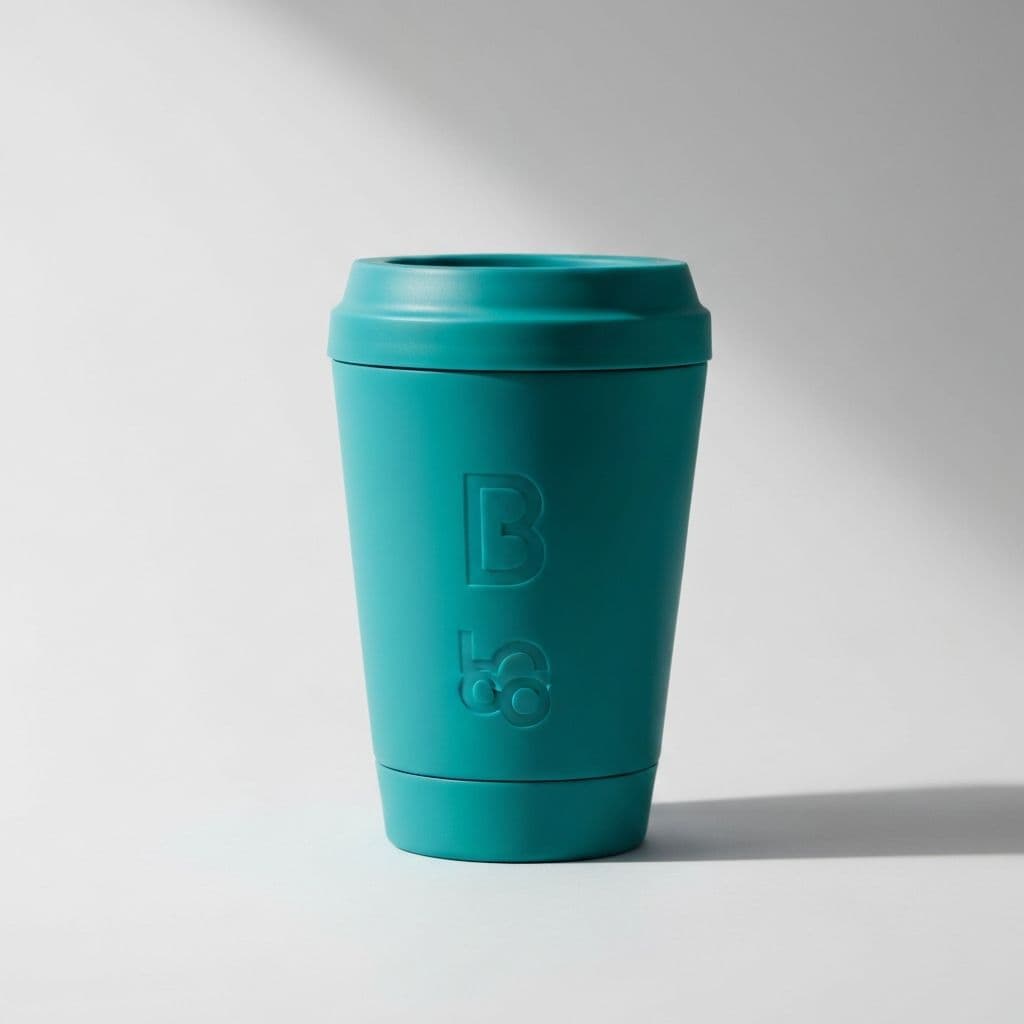
The reusable coffee cups page describes branded reusable coffee cups with lids for daily service, corporate gifting, outdoor events and hospitality teams. Whether a particular order falls within the exemption depends on the cost per cup and the conditions above, and nothing on the page says that it does.
What this article does not cover
The exemption removes the income tax charge on the employee. It does not decide whether the employer can deduct the cost, whether VAT on the purchase can be recovered, or what other reporting applies, and the sources read do not answer those. HMRC's page notes that a salary sacrifice arrangement is not exempt and must be reported on form P11D at the higher of the salary given up and the amount paid. The annual party exemption for staff events is a separate rule with its own limit.
Where this stands
This was checked on 6 October 2026. Sections 323A and 323B extend to the United Kingdom and are up to date with the changes known to be in force on or before 4 and 6 October 2026. Changes from the Finance Act 2026 listed as yet to be applied concern employee car and van ownership schemes and payments for cancelled shifts, and do not touch these sections. The GOV.UK page is dated 1 April 2015. To price a branded run for staff, ask for a quote.
Frequently Asked Questions
Is a branded cup given to staff at Christmas taxable?
Section 323A of the Income Tax (Earnings and Pensions) Act 2003 says no income tax arises on a benefit from an employer to an employee if it is not cash or a cash voucher, its cost does not exceed 50 pounds, it is not provided under salary sacrifice or another contractual obligation, and it is not provided in recognition of particular services. In our reading, a modest cup given to all staff can meet those conditions.
What is the limit for trivial benefits?
Section 323A sets the benefit cost at no more than 50 pounds. Where a benefit is provided to several people and the cost cannot practicably be worked out for each, it is the average cost per person.
Is there a different limit for company directors?
Where the employer is a close company and the employee is a director or other office-holder, or a member of their family or household, section 323B sets an annual exempt amount of 300 pounds. HMRC's page says a director of a close company cannot receive trivial benefits worth more than 300 pounds in a tax year.
Can a cup given as a reward for performance be a trivial benefit?
Not if it is provided in recognition of particular services performed in the employment or in anticipation of them. That is condition D of section 323A, and HMRC's page says the benefit must not be a reward for work or performance.
Does the exemption apply across the UK?
Sections 323A and 323B are marked as extending to the United Kingdom on legislation.gov.uk.
How we checked this article
Checked on 6 October 2026. Sections 323A and 323B of the Income Tax (Earnings and Pensions) Act 2003 were read in revised form on legislation.gov.uk. Both extend to the United Kingdom and are shown as up to date with all changes known to be in force on or before 4 and 6 October 2026. The pages list effects yet to be applied from the Finance Act 2026 (2026 c. 11), which insert or amend sections 114(1)(a), 116(1), 116A and 221A; sections 17 and 22 of that Act were read, concern employee car and van ownership schemes and payments for cancelled, moved or curtailed shifts, and do not touch sections 323A or 323B, so the text used is the text in force. HMRC's Tax on trivial benefits page was read through the GOV.UK content API; it shows 1 April 2015 as its last update, so it is the oldest page cited and the statute is treated as the authority where the two differ in wording. The article reports the exemption for income tax on the employee and does not cover corporation tax relief for the employer, VAT on the cups or payroll reporting beyond what the GOV.UK page says. The Act's close company definition was not read; the GOV.UK page's own description is quoted as the page's. Applications of the conditions to a branded cup given to staff are marked as our reading. Product details come from this site's reusable coffee cups page, read on 6 October 2026, which describes branded reusable coffee cups with lids for daily service, corporate gifting, outdoor events and hospitality teams; the article repeats only that. No price, lead time or quantity of a cup is repeated.
- Published by
- Branded Cups Ltd
- Sources last checked
- 2026-10-06
Sources
- Income Tax (Earnings and Pensions) Act 2003, section 323A (trivial benefits provided by employers)
- Income Tax (Earnings and Pensions) Act 2003, section 323B (available exempt amount)
- HMRC, Tax on trivial benefits (GOV.UK, last updated April 2015)
- Finance Act 2026, section 17 (employee car and van ownership schemes, not yet applied)
- Finance Act 2026, section 22 (payment for cancelled shifts, not yet applied)
- Branded Cups, Reusable coffee cups