TL;DR
The general rule in section 45 of the Income Tax (Trading and Other Income) Act 2005 and section 1298 of the Corporation Tax Act 2009 is that expenses of providing gifts are not deductible. The exception in section 47 and section 1300 covers a gift that incorporates a conspicuous advertisement for the giver, unless it is food, drink, tobacco or a token or voucher, or unless its cost together with other gifts to the same person in the same period exceeds £50. For VAT, HMRC's guide says no VAT needs to be accounted for on business gifts to the same person while their total cost stays within £50 excluding VAT in any 12-month period. The Ministry of Justice's Bribery Act guidance treats reasonable promotional expenditure as part of doing business while noting it can be used as a bribe.
A cup with your name on it is the kind of thing businesses hand to clients, suppliers and prospects. Two sets of HMRC rules decide what that costs you in tax: the rule on whether the expense is deductible from profits, and the rule on whether giving the cup away counts as a supply for VAT. Both turn on a £50 limit, set out in the 2005 and 2009 tax Acts and, for VAT, in the Value Added Tax Act 1994 and HMRC's guide, and they count it in different ways.
The starting point: gifts are not deductible
Section 45 of the Income Tax (Trading and Other Income) Act 2005 says the general rule is that no deduction is allowed in calculating the profits of a trade for expenses incurred in providing entertainment or gifts in connection with the trade. Section 1298 of the Corporation Tax Act 2009 sets the same general rule for companies. HMRC's manual puts it briefly: business gifts are not allowed as a deduction against profits, and the legislation treats gifts in the same way as business entertaining. Both Acts then list exceptions.
The exception a printed cup can fit
The exception that matters for promotional merchandise is Case B, in section 47 of the 2005 Act and section 1300 of the 2009 Act. It applies where the gift incorporates a conspicuous advertisement for the giver, unless the gift is food, drink, tobacco or a token or voucher exchangeable for goods, or unless the cost of the gift to the giver, together with any other gifts other than those excluded types given to the same person in the same period, exceeds £50. According to HMRC's manual, the period is the tax year for unincorporated businesses and the accounting period for companies. Both sections let the Treasury increase the sum by order.
HMRC's manual (BIM45070) says gifts which contain a conspicuous advertisement for the trader are generally allowed, gives diaries, pens and mouse mats as common examples of allowable gifts, and says the advertisement should be on the gift itself and not just on the wrapping. The manual does not name cups. A cup with the giver's name or logo printed on the cup itself fits the description in the statute, but it is a reading of the wording and not a listed example. Case A is a different exception: an item that it is the giver's own trade to provide, given away in the ordinary course of the trade to advertise to the public generally.
How the limit is counted
The £50 in the 2005 and 2009 Acts is the cost of the gift to the giver, added to any other gifts to the same person in the same period. Food, drink, tobacco and vouchers are outside the exception altogether and are left out of that running total. Once a person's total in the period exceeds the £50 set by the 2005 and 2009 Acts, the exception no longer applies. Because the total runs per person, a cup that costs little on its own still counts towards the total of anyone who receives other gifts from you in the same tax year or accounting period.
VAT counts it differently
VAT is a separate question. HMRC's VAT guide on business promotions, last updated on 25 June 2026, defines a business gift as a gift of goods made in the course of promoting your business and for which you were entitled to reclaim the VAT you were charged as input tax. A gift means a definite, voluntary and unconditional transfer of the goods for no consideration. The guide lists brochures, posters and advertising matter, items distributed to trade customers, and goods given to customers as a thank you among business gifts.
In the version of the guide last updated on 25 June 2026, you do not have to account for VAT on business gifts made to the same person so long as the total cost of all the gifts to that person does not exceed £50, excluding VAT, in any 12-month period, and any 12-month period that includes the day of the gift will do. Above that, you must normally account for output tax on the total cost value of all the gifts where you were entitled to claim the VAT on the purchase. HMRC's supply and consideration manual adds that the £50 relief applies only to gifts made in the course or furtherance of business, not to gifts for personal use, and that a gift within the limit is not a supply for VAT purposes. At 30 September 2026 the Act behind the limit is the Value Added Tax Act 1994: paragraph 5(1) of Schedule 4 treats the transfer of business goods as a supply, whether or not for a consideration, and paragraph 5(2)(a) excludes a business gift whose cost, together with the cost of any other business gifts made to the same person in the same year, was not more than £50. The Act defines a business gift as a gift of goods made in the course or furtherance of the business, cost as the cost to the donor of acquiring or producing the goods, and the same year as any period of twelve months that includes the day of the gift.
The two rules therefore differ in three ways worth noting. The income tax and corporation tax limit runs over the tax year or accounting period, the VAT limit over any 12-month period. HMRC's VAT guide states its limit excluding VAT, while the Acts refer to the cost of the gift and the sources cited here do not say how VAT is treated in that cost. And the tax exception also needs a conspicuous advertisement, while the VAT guide's definition of a business gift does not mention one.
Staff, and one point outside tax
Gifts to employees have their own exception in the same sections, Case C. It applies unless gifts are also provided for others and the gifts for the employees are incidental to those. How employees are taxed on what they receive is a separate matter that this article does not cover.
One rule outside tax is worth knowing before a large gifting programme. The Ministry of Justice's guidance on the Bribery Act 2010 says, in its discussion of bribing foreign public officials, that bona fide hospitality and promotional or other business expenditure which seeks to improve the image of a commercial organisation, better to present products and services, or establish cordial relations, is recognised as an established and important part of doing business, and that it is not the intention of the Act to criminalise it. It adds that hospitality and promotional expenditure can be employed as bribes. The same guidance lists the provision of gifts, hospitality and promotional expenditure among the topics a company's bribery prevention procedures might cover, depending on the risks it faces.
What it means for the order
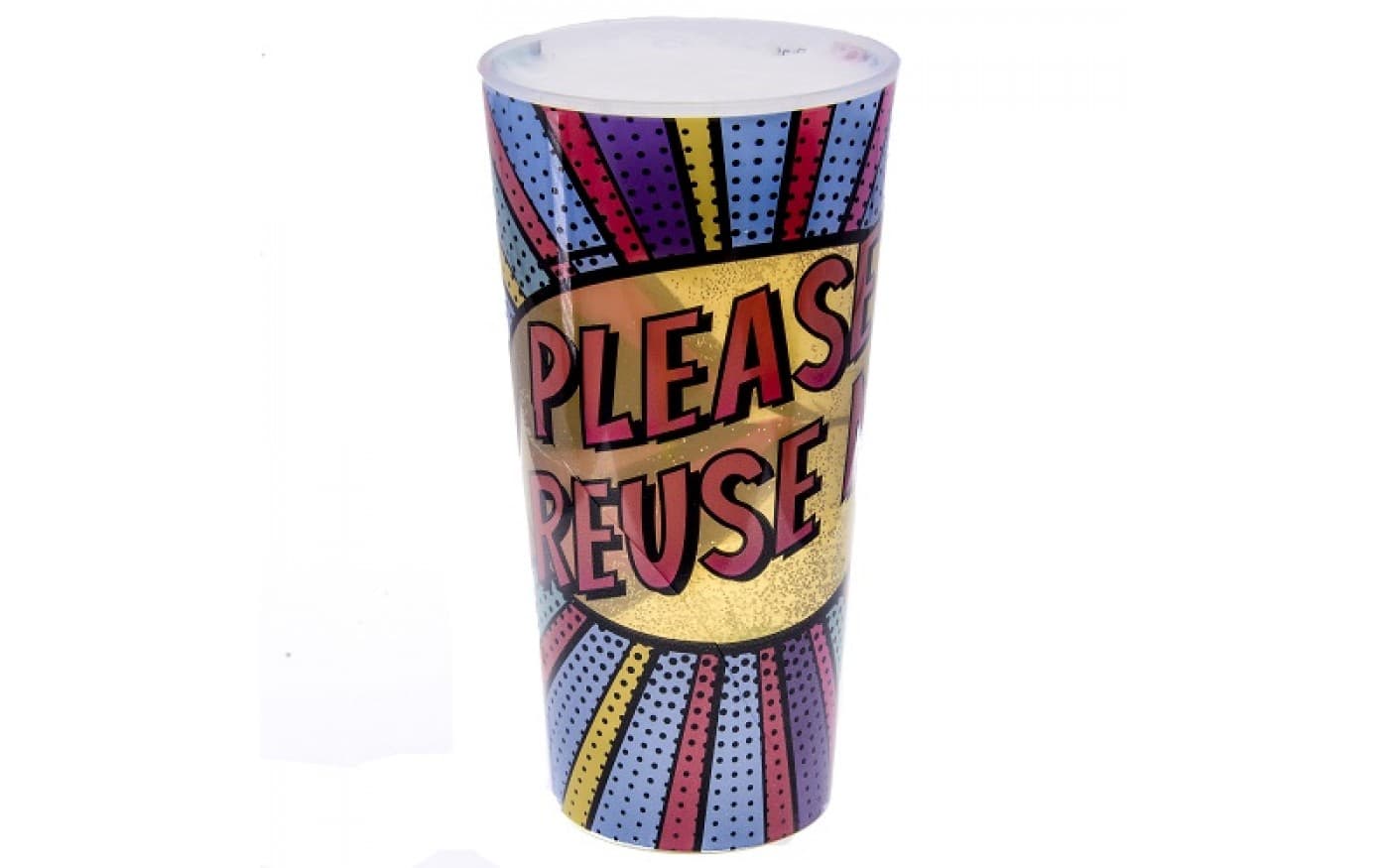
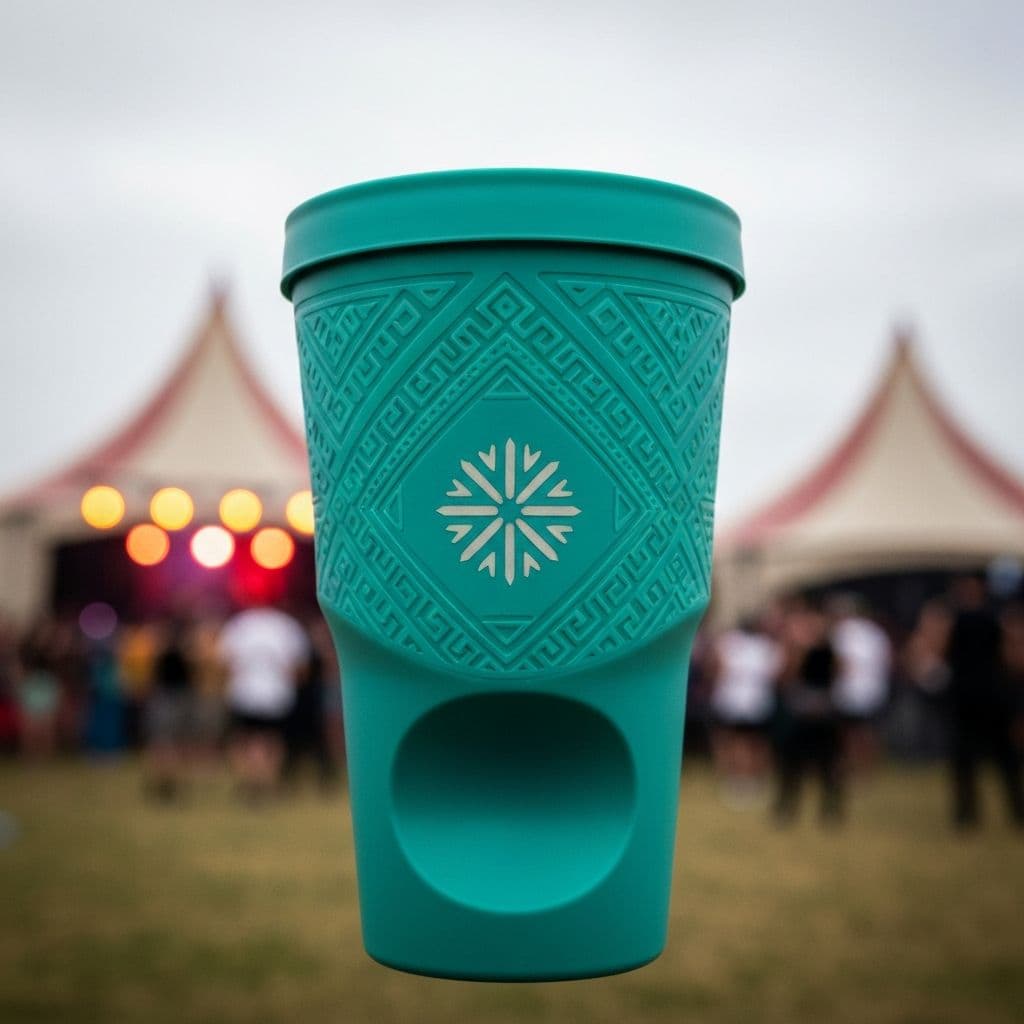
The promotional cups page describes pint and half pint cups printed in one colour or full colour and a 350ml reusable coffee cup printed in one colour, from 50 cups, with a sample cup available and the team checking the artwork before production. For the tax test, the point that follows is practical: HMRC's manual says the advertisement should be on the gift itself and not just on the wrapping, so the name or logo belongs on the cup and not only on a box or a card. If you are planning a client programme, ask for a quote with the quantities and recipients in mind, and check the treatment with your accountant.
Where this stands
This was checked on 30 September 2026 against the statutes and against HMRC's VAT guide, whose page was last updated on 25 June 2026. The 2026 updates to that guide concern its sections 1.2, 6.1 and 6.2, not its gifts paragraphs. The two Business Income Manual pages carry text from 2016 and match the statute as it stands. The oldest guidance cited is the Ministry of Justice's Bribery Act guidance, dated March 2011. The £50 figure in the 2005 and 2009 Acts can be raised by Treasury order, so it is worth confirming before you rely on it after 2026.
Frequently Asked Questions
Is a printed promotional cup a tax-deductible business gift?
It can be. Section 47 of the Income Tax (Trading and Other Income) Act 2005 and section 1300 of the Corporation Tax Act 2009 except a gift that incorporates a conspicuous advertisement for the giver, unless it is food, drink, tobacco or a voucher, or unless its cost with other gifts to the same person in the same period exceeds £50. HMRC's examples are diaries, pens and mouse mats, and cups are not named.
Does VAT apply when I give away promotional cups?
HMRC's VAT guide says you do not have to account for VAT on business gifts made to the same person so long as their total cost does not exceed £50, excluding VAT, in any 12-month period. Above that, you must normally account for output tax on the total cost value of all the gifts, where you were entitled to claim the VAT on the purchase.
Does the limit apply to each gift or to each person?
To each person. The cost of the gift is added to any other gifts, other than food, drink, tobacco and vouchers, given to the same person in the same tax year or accounting period. For VAT the running total is over any 12-month period.
Do the same rules apply to gifts to staff?
The tax Acts contain a separate exception for gifts to employees, Case C, which applies unless gifts are also provided for others and the employee gifts are incidental to them. How employees are taxed on what they receive is outside this article.
Does the Bribery Act rule out corporate gifts?
The Ministry of Justice guidance says the Government does not intend the Act to prohibit reasonable and proportionate hospitality and promotional or other similar business expenditure that seeks to improve a commercial organisation's image, present its products and services better or establish cordial relations. It adds that such expenditure can be employed as bribes. The passage sits in its discussion of bribing foreign public officials.
How we checked this article
Checked on 30 September 2026, statute first and guidance second. Sections 45 and 47 of the Income Tax (Trading and Other Income) Act 2005 and sections 1298 and 1300 of the Corporation Tax Act 2009 were read on legislation.gov.uk, which reported each as up to date with all changes known to be in force on or before a date between 28 and 30 September 2026. Each page also notes one pending change, made by the Planning (Consequential Provisions) (Wales) Act 2026, to the site restoration payments sections (section 168 of the 2005 Act and section 145 of the 2009 Act); it does not touch the gift provisions. The words 'tax year' in section 47(3)(b) have applied since 6 April 2024, replacing 'basis period'; section 1300 says 'accounting period'. The sum in the gift exception is the same in both Acts and the Treasury has the power to increase it. The HMRC Business Income Manual pages on gifts (BIM45065 overview and BIM45070 small gifts) were read next. GOV.UK's metadata dates the text of those two sections to 1 April 2016 and the manual as a whole shows an update of 4 August 2026; their content was compared line by line with the current statute rather than relied on alone, and they agree. Paragraph 5 of Schedule 4 to the Value Added Tax Act 1994 was read on legislation.gov.uk for the statutory limit and definitions: the page is up to date to 30 September 2026, sub-paragraph (2)(a) on business gifts has read as it does since 2003, and the amendments of 18 March 2026 (Finance Act 2026, on qualifying charitable donations) add sub-paragraph (2)(c) and a definition in (2ZA) and leave the wording on business gifts, cost and the same year unchanged. The VAT position was then taken from VAT Notice 700/7 on business promotions, whose page was last updated on 25 June 2026, at paragraphs 2.2 and 2.3. Its change notes for 2026 concern sections 1.2, 6.1 and 6.2 (the linked supplies concession) and not the gifts paragraphs, and the last note about gifts is dated 30 December 2019. HMRC's VAT supply and consideration manual page VATSC03322 was read for the small value gifts relief: its section metadata is dated 16 January 2019 and the manual as a whole shows an update of 7 March 2025. The Ministry of Justice guidance on the Bribery Act 2010 was read as a PDF for paragraphs 26 and 1.7. The document is dated March 2011 and is the oldest guidance cited; its GOV.UK page gives 22 January 2025 as the last update, and the change note for that update refers only to the details text of the page. The passage in paragraph 26 sits in the guidance's discussion of bribing foreign public officials, which the article says. Product details come from this site's promotional cups page. The article describes the published rules and is not tax advice on a particular business; the treatment of gifts to employees on the employee side is not covered.
- Published by
- Branded Cups Ltd
- Sources last checked
- 2026-09-30
Sources
- Income Tax (Trading and Other Income) Act 2005, section 45 (business entertainment and gifts: general rule)
- Income Tax (Trading and Other Income) Act 2005, section 47 (business gifts: exceptions)
- Corporation Tax Act 2009, section 1298 (business entertainment and gifts)
- Corporation Tax Act 2009, section 1300 (business gifts: exceptions)
- HMRC, BIM45065: Specific deductions, entertainment, gifts overview
- HMRC, BIM45070: Specific deductions, entertainment, gifts, exceptions, small gifts
- GOV.UK, Business promotions (VAT Notice 700/7), updated 25 June 2026
- HMRC, VATSC03322: Business gifts, value limit
- Ministry of Justice, The Bribery Act 2010: guidance about procedures which relevant commercial organisations can put into place
- Branded Cups, Promotional cups
- Value Added Tax Act 1994, Schedule 4, paragraph 5 (transfers of business goods and business gifts)