
TL;DR
Section 264 of the Income Tax (Earnings and Pensions) Act 2003 says no income tax arises on an annual party or similar annual function provided for an employer's employees, and available to them generally or to those at a particular location, if the cost per head does not exceed 150 pounds. Where there are two or more such functions in a tax year, one or more can be exempt if the cost per head of the exempt functions does not exceed 150 pounds in aggregate. Cost per head is the total cost of the function, plus any transport or accommodation incidentally provided for people attending, divided by the number of people attending, and it includes VAT. HMRC's page says that if an event is not exempt, the employer reports it on form P11D and pays Class 1A National Insurance on its full cost. The provision extends to the United Kingdom.
A staff Christmas party is a benefit an employer provides to everyone at once, and whether the employees are taxed on it depends on a limit in section 264 of the Income Tax (Earnings and Pensions) Act 2003. HMRC explains the rule on a GOV.UK page about social functions and parties. This article sets out what the section and the page say, what goes into the cost per head, and how drinks and cups fit in. It covers income tax on the employee and the employer's reporting duties as the page gives them. Our guide to branded cups as staff gifts covers a different exemption, for small gifts.
The conditions
Section 264(1) applies to an annual party or similar annual function provided for an employer's employees and available to them generally, or available generally to those at a particular location. Under section 264(2), where only one such function is provided in the tax year, no liability to income tax arises if the cost per head does not exceed 150 pounds.
HMRC's page gives the same test in plain terms. To be exempt the party or similar social function must be open to all employees, be annual, such as a Christmas party or summer barbecue, and cost 150 pounds or less per person. It says this also applies to online or virtual parties. If a business has more than one location, an annual event open to all staff at one location still counts, and an employer can put on separate parties for different departments as long as every employee can attend one of them.
Several events in a year
Section 264(3) deals with two or more functions in the same tax year. It says no income tax arises on one or more of them, the exempt party or parties, if the cost per head of the exempt party or parties does not exceed 150 pounds, or 150 pounds in aggregate. HMRC's page puts it this way: as long as the combined cost of events is no more than 150 pounds per head, they are exempt. It says that if any event costs less than 150 pounds per head it may be counted as exempt, but not if the exemption has already been used up on another event, and that the full cost of any additional event that takes the total over the limit has to be reported and paid on even if it costs less than 150 pounds per head on its own.
What goes into the cost per head
Under section 264(4), the cost per head is the total cost of providing the party or function, and any transport or accommodation incidentally provided for people attending it, whether or not they are the employer's employees, divided by the number of those people. Section 264(5) says the total cost includes VAT on the expenses incurred in providing the party, function, transport or accommodation.
Two points follow from the wording and from the Employment Income Manual, which says to divide by the total number of people, including non-employees, who attend. The divisor is everyone attending, so guests who are not employees raise the number of people the cost is spread across, and the costs of providing the function for them are part of the total. And VAT is counted in the total, so a figure that leaves it out understates the cost.
What counts as annual
HMRC's Employment Income Manual gives the general meaning of annual in this section as something that happens once a year on a recurring basis, and says it follows that a one-off event, for example a party to celebrate a 25th anniversary, cannot be an annual party or function. The same page says the figure of 150 pounds is an exemption and not an allowance: for a function outside it, the charge is on the full cost per head, not only the excess over 150 pounds.
If the limit is exceeded
HMRC's page says that if any of the events provided are not exempt, the employer must report the costs to HMRC on each employee's form P11D and pay Class 1A National Insurance on the full cost of the event. The Employment Income Manual, quoted above, puts the same point as a charge on the full cost per head and not only the excess over 150 pounds. HMRC's page also says that for a party provided under a salary sacrifice arrangement the employer must report how much it is worth to each employee.
Where cups fit in
The Act does not list items. In our reading, cups bought or hired for the party are part of the total cost of providing it, along with food, drink, venue and entertainment, and so go into the per head figure. A cup that guests are given to take home may be a separate benefit from the party. The sources read do not say whether it is, and in our reading the employer should settle that with its adviser or with HMRC before treating the cup as outside the per head figure.
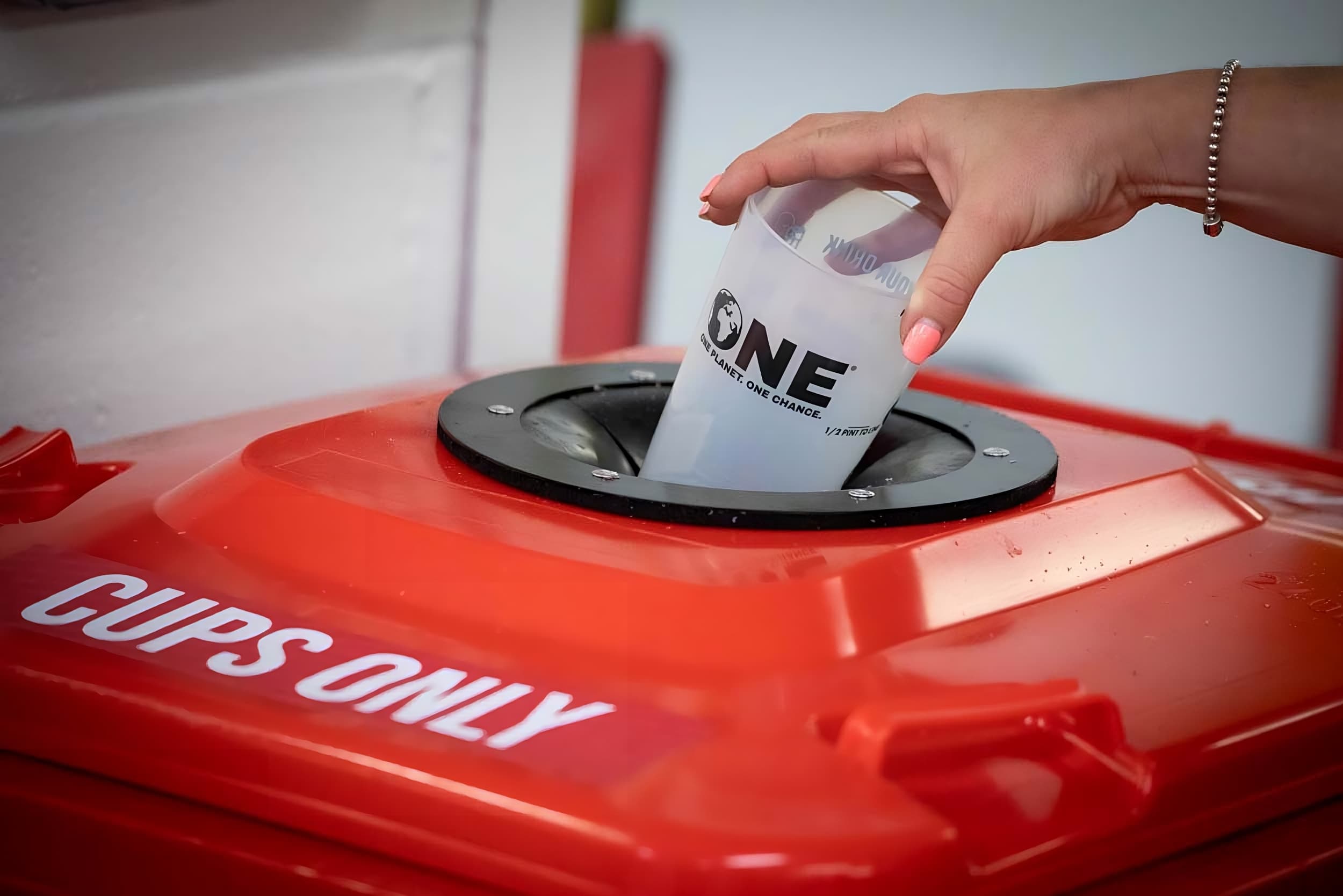
The cup hire page describes hire cups as shatterproof, dishwasher safe and BPA-free, says they are used where glass is not practical, and says collection, washing and drying support is available after the event. Our guide to promotional cups for corporate events covers choosing the format and the print. For a party the hire fee, as a cost of the event, is the sort of item that belongs in the total, and a quote can be asked for with the numbers attending.
What this article does not cover
The exemption removes the income tax charge on the employee. It does not decide whether the employer can deduct the cost of the party, whether VAT on it can be recovered, or how any alcohol licence for a venue works. The sources read for this article do not answer those questions.
Where this stands
This was checked on 11 October 2026. Section 264 extends to the United Kingdom and is up to date with the changes known to be in force on or before 9 October 2026. The HMRC page is dated 6 April 2016 and is the oldest page cited here. Changes from the Finance Act 2026 listed as yet to be applied do not touch section 264.
Frequently Asked Questions
Is a staff Christmas party taxable?
Under section 264 of the Income Tax (Earnings and Pensions) Act 2003, no income tax arises on an annual party or similar function provided for employees and available to them generally, or to those at a particular location, if the cost per head does not exceed 150 pounds. HMRC's page adds that the event must be open to all employees and annual.
What counts towards the 150 pound limit?
Section 264(4) counts the total cost of providing the party plus any transport or accommodation incidentally provided for people attending, divided by the number of people attending, whether or not they are employees. Section 264(5) says the total includes VAT.
Can I hold more than one party in a year?
Yes. Section 264(3) exempts one or more functions if the cost per head of the exempt functions does not exceed 150 pounds in aggregate. HMRC's page says the full cost of any additional event that takes the total over the limit has to be reported and paid on.
What happens if the party goes over the limit?
HMRC's page says the employer reports the cost on each employee's form P11D and pays Class 1A National Insurance on the full cost of the event.
Does the exemption apply across the UK?
Section 264 is marked as extending to the United Kingdom on legislation.gov.uk.
How we checked this article
Checked on 11 October 2026. Section 264 of the Income Tax (Earnings and Pensions) Act 2003 was read in revised form on legislation.gov.uk. It extends to the United Kingdom and is shown as up to date with all changes known to be in force on or before 9 October 2026; the figure of 150 pounds in subsections (2) and (3) was substituted on 13 June 2003. The page lists effects yet to be applied from the Finance Act 2026 (2026 c. 11) which insert or amend sections 114(1)(a), 116(1), 116A and 221A; sections 17 and 22 of that Act were read, concern employee car and van ownership schemes and payments for cancelled, moved or curtailed shifts, and do not touch section 264. HMRC's Expenses and benefits: social functions and parties page was read through the GOV.UK content API; it shows 6 April 2016 as its last update and its wording matches the statute. HMRC's Employment Income Manual page EIM21690 (annual parties and other social functions, last updated 23 November 2020) was also read, and the article reports its meaning of annual. The article reports the income tax exemption for the employee and the reporting steps the GOV.UK page gives, and does not cover corporation tax relief, VAT on the party, or whether items taken home are separate benefits. Applications of the section to cups bought for a party are marked as our reading. Product details come from this site's cup hire page, read on 11 October 2026, which describes hire cups as shatterproof, dishwasher safe and BPA-free, says they are used where glass is not practical, and says collection, washing and drying support is available after the event; the article repeats only that. No price, lead time or quantity of a cup is repeated.
- Published by
- Branded Cups Ltd
- Sources last checked
- 2026-10-11
Sources
- Income Tax (Earnings and Pensions) Act 2003, section 264 (annual parties and functions)
- HMRC, Expenses and benefits: social functions and parties (GOV.UK, last updated April 2016)
- HMRC, Employment Income Manual EIM21690: annual parties and other social functions
- Finance Act 2026, section 17 (employee car and van ownership schemes, not yet applied)
- Finance Act 2026, section 22 (payment for cancelled shifts, not yet applied)
- Branded Cups, Reusable cup hire