TL;DR
Licensed bars and clubs in England and Wales carry a mandatory condition that free potable water is provided on request to customers where it is reasonably available. The texts do not say what it must be served in, and the Home Office guidance says the condition does not apply to activities authorised by a temporary event notice. Separately, regulation 22 of the Workplace (Health, Safety and Welfare) Regulations 1992 applies in Great Britain and requires wholesome drinking water for all persons at work in the workplace, and a sufficient number of suitable cups or other drinking vessels unless the water is in a jet people can drink from easily, subject to the exceptions in regulation 3. HSE's code adds that for non-disposable cups a washing facility should be provided nearby.
This article covers two different rules that ask for drinking water, and only one of them mentions cups. One binds licensed bars and clubs in England and Wales and concerns customers. The other binds employers, and others who control a workplace, across Great Britain and concerns the people at work there. An event whose bar runs under a premises licence or club premises certificate can fall under both, because the crowd at the bar and the staff behind it are different groups with different rules.
Customers at a licensed bar
Paragraph 2 of the Schedule to the Licensing Act 2003 (Mandatory Licensing Conditions) Order 2010 is a single sentence: "The responsible person must ensure that free potable water is provided on request to customers where it is reasonably available." The Home Office guidance lists the provision of free tap water among the mandatory conditions that, it says at paragraph 10.35, apply to every licence and certificate authorising the sale and supply of alcohol for consumption on the premises, whether or not they are written on the licence.
The Home Office guidance, September 2026 edition, says at paragraph 10.44 that what is meant by reasonably available is a question of fact. Its example is a premises whose water supply had temporarily been lost because of a broken mains water supply: it would not be reasonable to expect free tap water there, but it may be reasonable to expect bottled water to be provided in such circumstances.
An older Home Office document, from September 2014, adds two points. The water does not need to come from a tap, and the condition helps people space out their drinks and not become intoxicated quickly, which reduces the risk of crime and disorder. Paragraph 2 of the Schedule has not changed since the Schedule was substituted on 1 October 2014. The September 2026 guidance does not repeat those two points, and the 2014 document is the oldest guidance document cited on the licensing side, which is why its date is given.
Neither the Order nor either guidance document says what the water must be served in. A cup, a jug or a bottle: the texts do not prescribe a vessel. As a mandatory condition it also stops at a bar run under a temporary event notice. The guidance says the mandatory licence conditions do not apply to activities, including the supply of alcohol, authorised by a temporary event notice, which is covered in our guide to half pints and the small measures condition.
Staff and other people at work
Regulation 22 of the Workplace (Health, Safety and Welfare) Regulations 1992 applies in England, Wales and Scotland and has three parts. An adequate supply of wholesome drinking water must be provided for all persons at work in the workplace. Every supply must be readily accessible at suitable places and conspicuously marked by an appropriate sign where necessary for reasons of health or safety. And where a supply of drinking water is required, "there shall also be provided a sufficient number of suitable cups or other drinking vessels unless the supply of drinking water is in a jet from which persons can drink easily."
That last limb is the rule that names cups. Under regulation 4, the duty sits with every employer for workplaces under their control where their employees work, and with anyone else who has control of a workplace, to the extent of that control, in connection with a trade, business or other undertaking. Regulation 4(4) adds that the duty on those in control does not apply to a self-employed person in respect of their own work or the work of any partner of theirs in the undertaking.
The Health and Safety Executive's approved code of practice fills in the detail. Paragraph 211 says drinking cups or beakers should be provided unless the supply is through a drinking fountain, and that for non-disposable cups a facility for washing them should be provided nearby. Paragraph 209 says drinking water should normally be obtained directly from a suitable public or private mains supply, and that refillable containers, where they have to be used, should be suitably enclosed to prevent contamination and refilled at least once a day. The code says of itself that following its advice is enough to comply with the law on the matters it covers, and that anyone prosecuted for breach of health and safety law who is proved not to have followed the relevant provisions of the code has to show they complied in some other way.
Events and temporary sites
Regulation 3 also takes some workplaces out of regulation 22 altogether: ships, construction sites where the only activity is construction work, workplaces below ground at a mine, and workplaces in or on transport of the kinds listed in regulation 3(4), such as an aircraft, locomotive, rolling stock, trailer or licensed vehicle. HSE's guidance at paragraph 22 adds that the Regulations apply to forms of transport that are fixed in position and no longer being used as originally intended, for example those used as restaurants or tourist attractions. Regulation 3(3) says that for temporary work sites the requirements of regulations 20 to 25, drinking water included, apply so far as is reasonably practicable. HSE's guidance at paragraph 25 of the same publication, which is not part of the approved code, says temporary work sites include work sites used only infrequently or for short periods, and fairs and other structures which occupy a site for a short period. On that wording a fair is named. Festivals are not named, and this article does not say whether a particular festival site counts. On the wording of regulation 4, more than one person can be bound at a shared site, each for the matters within their control, subject to the self-employed exception in regulation 4(4). HSE's guidance at paragraph 33 adds that where employees work at a workplace which is not under their employer's control, the employer has no duty under the Regulations, but should, as part of its general duties under the Health and Safety at Work etc Act 1974, take any steps necessary to ensure that toilets and washing facilities will be available. That paragraph does not mention drinking water.
The two rules come from different regimes: one sits in licensing law and the other in health and safety law.
Choosing the cup
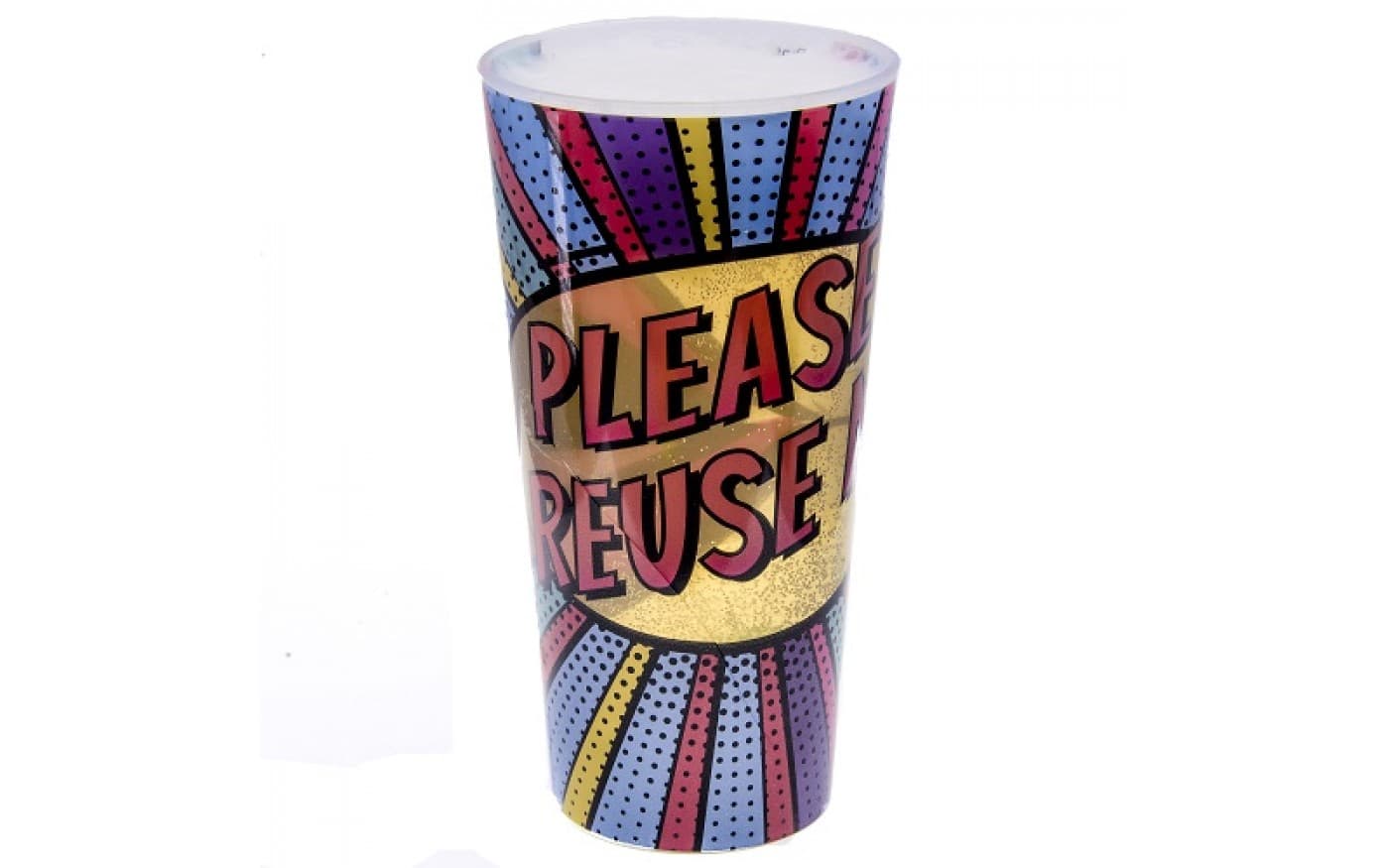
For people at work, regulation 22(3) requires cups or other drinking vessels unless the water is a jet, and regulation 3(3) applies that so far as is reasonably practicable at a temporary work site. The regulation does not limit the vessels to disposable ones, and the code adds the washing facility only for non-disposable cups. The reusable coffee cups sold here start at 50 cups, and the site lists its event cups and its Circular coffee cups as dishwasher safe.
For a bar, the condition names no vessel, so the choice is operational. Blank stock cups are sold for events that want reusable cups without commissioning artwork, and the reusable event cups range starts printed runs at 50. Events that would rather not wash can look at cup hire, which starts at 1,000 cups and offers collection, washing and drying support after the event.
Where this stands
This was checked on 30 September 2026. Regulation 22 has no known outstanding changes on legislation.gov.uk. The HSE code is the second edition of 2013 and the oldest guidance document cited on the workplace side. It prints one word of regulation 22 differently from legislation.gov.uk, health and safety where the legislation has health or safety, so the regulation is quoted here from legislation.gov.uk. On the licensing side, the only 2026 amendment to the Schedule concerns age verification in paragraph 3. If you are planning a water point or an office kitchen, ask for a quote with the quantities and the washing arrangement you have in mind.
Frequently Asked Questions
Does a bar have to give customers free tap water?
In England and Wales, a licence authorising alcohol to be drunk on the premises carries a mandatory condition that free potable water is provided on request to customers where it is reasonably available. The Home Office guidance says what is reasonably available is a question of fact, and that the condition does not apply to activities authorised by a temporary event notice.
Does the free water condition say what the water must be served in?
No. Neither the Order nor the Home Office guidance says whether the water must come in a cup, a jug or a bottle. The 2014 Home Office document adds that it does not need to come from a tap.
Do employers have to provide cups for drinking water?
Regulation 22(3) of the Workplace (Health, Safety and Welfare) Regulations 1992 requires a sufficient number of suitable cups or other drinking vessels where drinking water is required, unless the supply is in a jet from which persons can drink easily.
Can an office use reusable cups instead of disposable ones?
The regulation says cups or other drinking vessels without limiting them to disposable ones. HSE's approved code of practice says that for non-disposable cups a facility for washing them should be provided nearby.
Does the workplace rule apply to staff at a festival or fair?
Regulation 3(3) applies the drinking water requirement to temporary work sites so far as is reasonably practicable, and HSE's guidance lists work sites used only infrequently or for short periods, and fairs and other structures which occupy a site for a short period, as examples, without naming festivals. Regulation 4 says who is bound: each employer for workplaces under their control, and others in control of the workplace to the extent of their control. The duty on those in control does not apply to a self-employed person in respect of their own work or the work of any partner of theirs.
How we checked this article
Checked on 30 September 2026. Paragraph 2 of the Schedule to the Licensing Act 2003 (Mandatory Licensing Conditions) Order 2010 was read in its revised form on legislation.gov.uk; the textual amendments show the Schedule substituted on 1 October 2014 and only paragraph 3 amended since, on 15 September 2026, so paragraph 2 reads as it did in 2014. The Home Office Revised Guidance under section 182, September 2026 edition, was read as a PDF for paragraphs 10.35 and 10.44. The GOV.UK page for the guidance was updated on 15 September 2026 for the age verification section and to add an accessible version; its change history names other paragraphs (1.19 and 8.65) and does not name paragraphs 10.35 or 10.44 in any entry; several older entries say only that the guidance was updated or reissued, the latest on 26 November 2025. The Home Office Guidance on Mandatory Licensing Conditions of September 2014 (published on GOV.UK on 3 September 2014 and not updated since) is the oldest guidance document cited on the licensing side: its section on potable water was compared with the Order and is consistent with it, only that section is used, and the September 2026 guidance does not repeat its two points. Regulations 3, 4 and 22 of the Workplace (Health, Safety and Welfare) Regulations 1992 were read on legislation.gov.uk, which shows no known outstanding effects for any of them. Regulation 22 has stood in its original wording since it came into force (1 January 1993 for specified purposes, 1 January 1996 otherwise). Regulation 3 was substituted on 6 April 2015 by the Mines Regulations 2014, so the temporary work sites clause is now regulation 3(3), although the 2013 code, which predates that change, prints it as 3(2). Regulation 4(4) exempts a self-employed person from the control duty in respect of their own work. The HSE approved code of practice and guidance L24, second edition, published in 2013, was read as a PDF: the status statement, paragraphs 22, 25 and 33 (marked as guidance, not as approved code), and paragraphs 209 to 211 on drinking water (marked as approved code). The code prints regulation 22(2)(b) with the words health and safety where the legislation, as made and as revised, has health or safety, so the regulation is quoted from legislation.gov.uk and not from the code. The HSE page for the code says it will begin to update its guidance on welfare facilities for visiting delivery drivers and names regulations 20 and 21 in particular; it does not name regulation 22. Product details come from this site's coffee cup, event cup and cup hire pages. The licensing condition applies in England and Wales and regulation 22 in Great Britain; no other nation is covered. Whether a particular event's bar falls under the licensing condition depends on how it is authorised and is not decided here.
- Published by
- Branded Cups Ltd
- Sources last checked
- 2026-09-30
Sources
- The Licensing Act 2003 (Mandatory Licensing Conditions) Order 2010, Schedule, paragraph 2 (revised)
- Home Office, Revised Guidance issued under section 182 of the Licensing Act 2003 (September 2026)
- Home Office, Guidance on Mandatory Licensing Conditions (September 2014)
- The Workplace (Health, Safety and Welfare) Regulations 1992, regulation 22 (drinking water)
- The Workplace (Health, Safety and Welfare) Regulations 1992, regulation 3 (application)
- The Workplace (Health, Safety and Welfare) Regulations 1992, regulation 4 (requirements)
- HSE, Workplace health, safety and welfare: approved code of practice and guidance L24 (second edition, 2013)
- HSE, L24 publication page
- Branded Cups, Reusable coffee cups
- Branded Cups, Reusable event cups
- GOV.UK, Revised guidance issued under section 182 of the Licensing Act 2003 (publication page and change history)
- GOV.UK, Guidance on mandatory licensing conditions (publication page, September 2014)
- Branded Cups, Reusable cup hire